2026

Editor's note — 30.07.2026
On Friday 4th December Charles Céleste Hutchins released a new EP, Basic Waveforms, and I was happy to create the artwork for it! Charles had already had a go at creating artwork for it but I jumped in and said I could probably create something based on it.
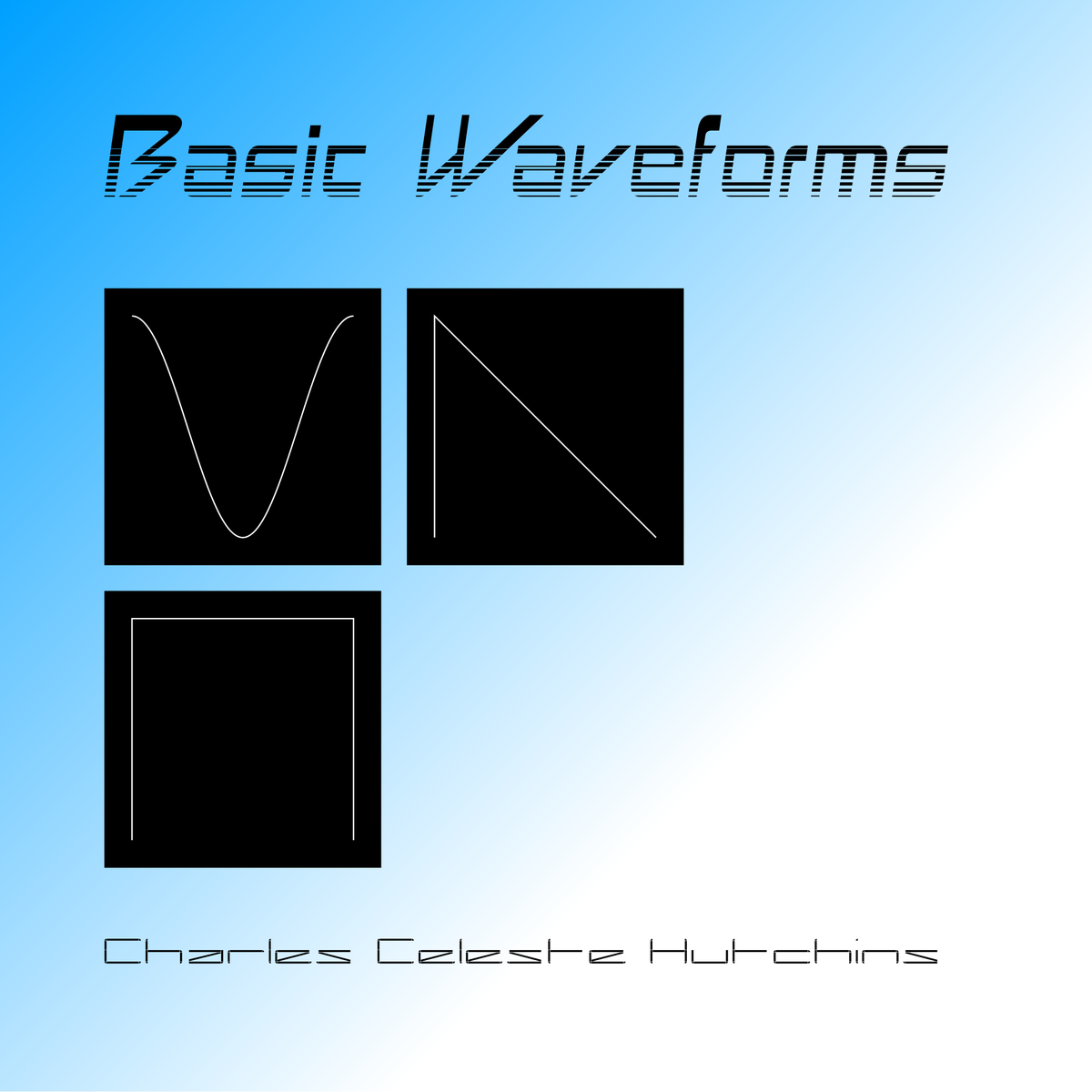
Before I get into how I made the artwork you should definitely listen to and buy the EP.
I already knew that I wanted to use analog video synthesis to create the artwork. For those not in the know, video synthesis is similar to audio synthesis, but instead of +1 to -1 doing amplitude things, think of it as going from white (+1) to black (0) to white (-1). This creates vertical lines on a screen. The higher the frequency, the more lines there are. The higher the amplitude the more visible the lines are. Of course there’s a lot more to this but that basic explanation should suffice for now.
I have a modular video synthesiser featuring a bunch of modules primarily from LZX and Syntonie. Check out my full setup on Modulargrid if you’re interested.
Side note, you can always take a step into video synthesis without shelling out a lot of money by using Hydra from Olivia Jack. Here’s an example of a few waveforms with help from a plugin by kandid.
The first stage was building the video patch for each waveform. LZX’s DWO3 module is responsible for most of it. I just modulated some vertical square waves with either a horizontal sine, square, or triangle wave.
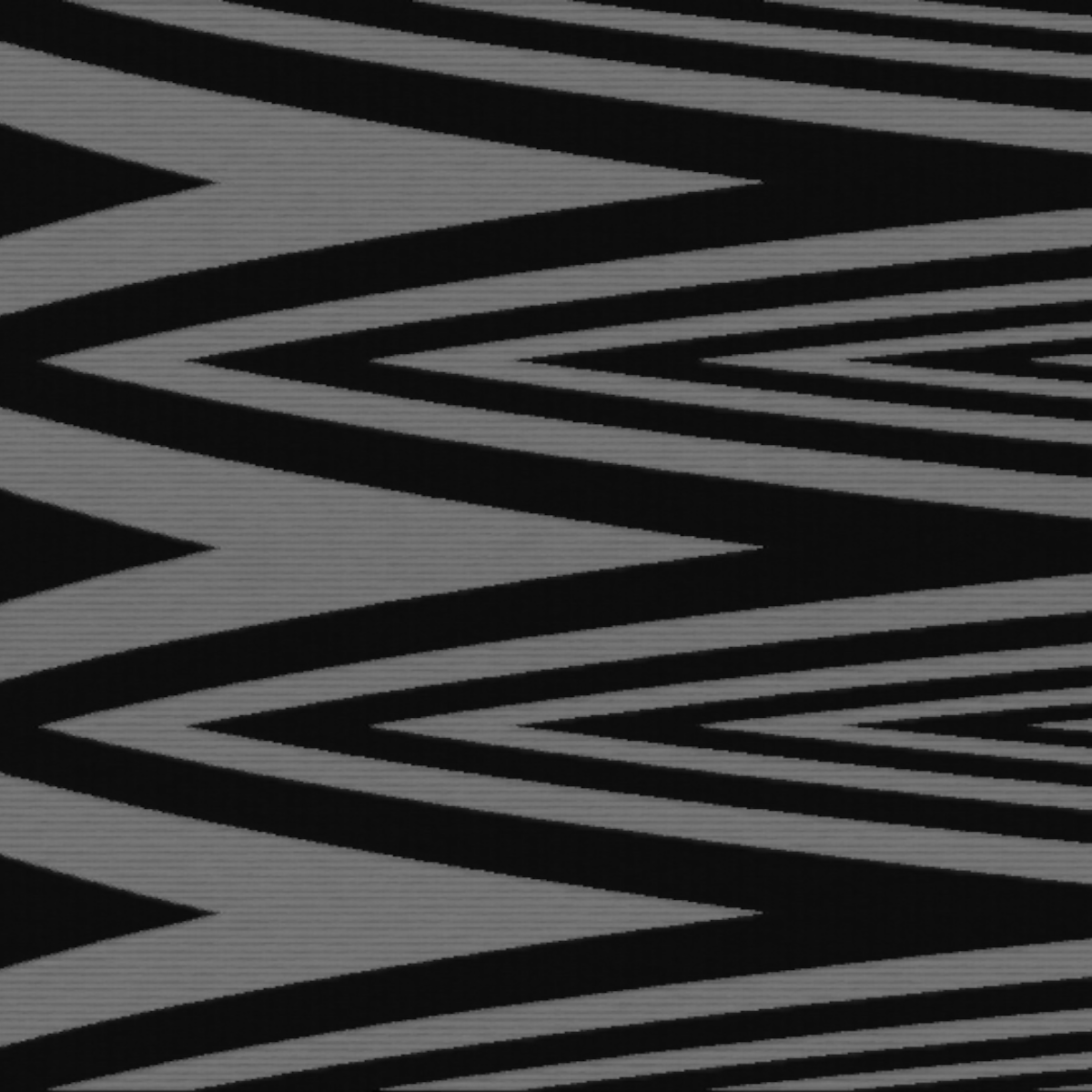
I also created a video for each track. The Univer Inter midi to CV module made creating a timeline for the video really easy as I could create a midi sequence using any software on that could output midi.
Originally I wanted to use Ossia to send out midi values but I couldn’t get it to work exactly how I wanted so instead I used Ardour which might sound like a surprising choice!

In Ardour I created a CC automation track and tried to make the values reflect the intensity of the music. This was sent to Univer Inter over USB and then to the CV input of a few different eurorack modules.
With all the automation set up I hit play and recorded the video using OBS. I also controlled the video synthesiser manually for some parts to avoid it feeling too robotic. Here’s a bit of me recording the Squares track.
So that’s everything done, right? Nope! I really liked the output but felt it looked a bit too clean despite it being the output of a noisy analog setup. I wanted to have a few more subtle imperfections, similar to the CRT shaders that you get on things like Retroarch. I could have used the brilliant ntsc-rs plugin to achieve this but even that didn’t feel right.
Here’s a section of the Sines track as captured from OBS from a cheap composite capture card.
A common practice in the video synth world is something called rescanning, which is basically pointing a camera at a screen and recording the output. There’s a few reasons that you might want to do this including upscaling and for glitch art, but for my purpose the screen itself would introduce some hopefully subtle artefacts and make it look more authentically analog. One small problem: I don’t own a CRT! They’re getting expensive to buy (even second hand) and I needed one by the next day. Luckily Vivid Projects have several so I ventured there to use one.
Using a HDMI to composite adaptor I sent my laptop video out to an old Trinitron TV. Aaaand then the TV exploded! It was actually quite dramatic. It made a poof sound and then the magic smoke was released from the back. After apologies were given and the smoke cleared I opted to instead use a much smaller black and white CCTV monitor. I again loaded up the video into OBS and used a combination of Stable and CVB001 eurorack modules to have some control over contrast and saturation.
Once home I finally brought in all of the footage and did some basic cropping and perspective editing. A last-minute change I made was to show the TV frame. I think it helped to give context and show that it really is a CRT and not just a filter. There’s also a little bit of ghosting and screen flickering due to refresh rates of the camera and screen, but again I like it!
For the final EP cover I put the artist and title text on separately using GIMP as it was too blurry from the CRT rescan.
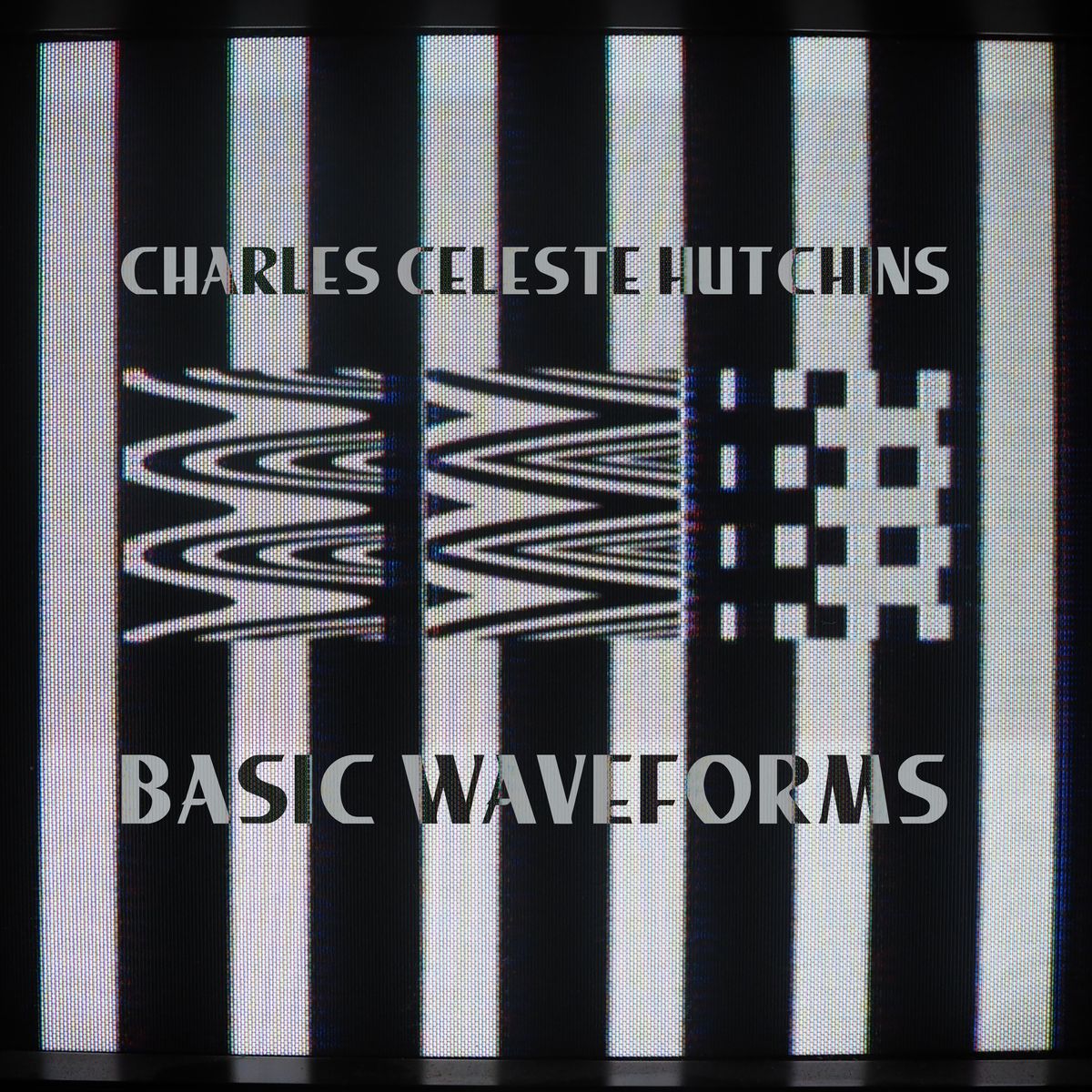
Overall I’m really happy with how it all turned out and I enjoyed the multi-part process of making it!
You should definitely go support Charles and buy his EP!

I don’t have too much to say about this year. It was of course difficult in many ways but there were some moments of relief, especially when I get to see people IRL. Of course the pandemic and everything else in this world is still happening but I really valued those little moments, especially around August - October, where I could just do things. Anyway, on with the overview of 2021!
Not much happened in January. The Idle Index exhibition at Phoneix concluded with a talk between some of the artists involved.
There were a lot of presentations, lectures and workshops delivered this year and this activity all started around February. After lectures for VCU and The Courtald I did a rather big presentation as part of the Screenwalk series from The Photographer’s Gallery and Fotomuseum . It was a general overview of my practice but also welcomed back a sonification performance but with added Korg Volca synths.
I also started delivering a four-part Blender workshop series. Side note, check out Devon Ko’s amazing thread on Blender resources and in particular why you shouldn’t follow the donut guy.
Finally this month I announced (Algo|Afro) Futures.
This programme is really important to me, and its launch comes/came at a time when it’s more important than ever to address racism and diversity in every aspect of art and culture.
This month I did two presentations which came out of my takeover on the Minorities in Stem twitter account in 2020. The first was a presentation about live coding for Nerd Nite London. The second presentation only two days later I had the honour of being a Guest Conductor on The Coding Train!
Although I don’t use Processing/p5.js in my work I do really admire the work that Dan Shiffman does and how accessible his tutorials are. He’s really one of my favourite online educators and so it was an honour to be asked to present my work and talk about live coding to his audience. I followed my presentation with a little performance too!
Fundraisers for both of those events helped to raise nearly £10,000 for Coders of Colour :-)
It was fairly quiet in terms of output, partly due to ill health. I spent a week in London delivering workshops for New Town Culture with Company Drinks.
After a long deliberation process I was happy to announce the successful applications to the (Algo|Afro) Futures programme, Jae Tallawah, Samiir Saunders, Rosa Francesca, and Emily Mulenga.
The Rules of Engagement exhibition that I curated for ODI happened back in November 2020, but in May I was in conversation with two of the participating artists, Everest Pipkin and Nick Briz, about their work . Always great to speak with them!
I also made a new video work for the Estuary Festival , which took a trip down the Thames Estuary, showing how it was projected to flood over 100 years. The video I created is titled A Short History of Nearly Everything (big-up to fellow Reuben fans).
Making this video was a real learning experience, particularly in making the soundtrack. I feel that since making the soundtrack for Windows Explorer and Nodes I’ve slowly begun to be more considerate about making music, and making a 40-minute soundtrack gave me a lot to think about in terms of pacing and transitions. Still more to learn about mixing and mastering, but I definitely could sense I made progress.
I also did visuals at the Overlap Social event, which was my first in-person performance since February 2020!
And also this month I contributed to an NFT artwork that was sold at the Proof of Sovereignty Christies auction. The artwork, F473 by Coin Artist was an NFT and also a game! I was really happy to be working with Coin Artist/Blockade Games again (I previously did some work with/for them in 2018 with Plasma Bears).
If you’ve been on the internet at all this year you will have no doubt seen the discourse around NFTs. I still have mixed-to-negative opinions about NFTs in general, so it’s very unlikely that you’ll see me “mint” or “drop” my own works,
This month I was really excited to finally launch A.M. Darke’s artwork that I commissioned for the ODI Rules of Engagement exhibition, fairlyintelligent.tech. To launch the artwork I was in conversation with A.M. about their work
Another huge announcement was that I Am Sitting in a Room was acquired by the Government Art Collection!
This artwork, originally made in 2010, is a remix of Alvin Lucier’s (RIP) work of the same name. I’m really happy that they chose to acquire this piece as it marked a significant moment in my career as a digital artist.
The big thing to happen this month was the conclusion and celebration event for the (Algo|Afro) Futures programme. After a bunch of in-person and online workshops each of the participants presented a new performance at Vivid Projects!
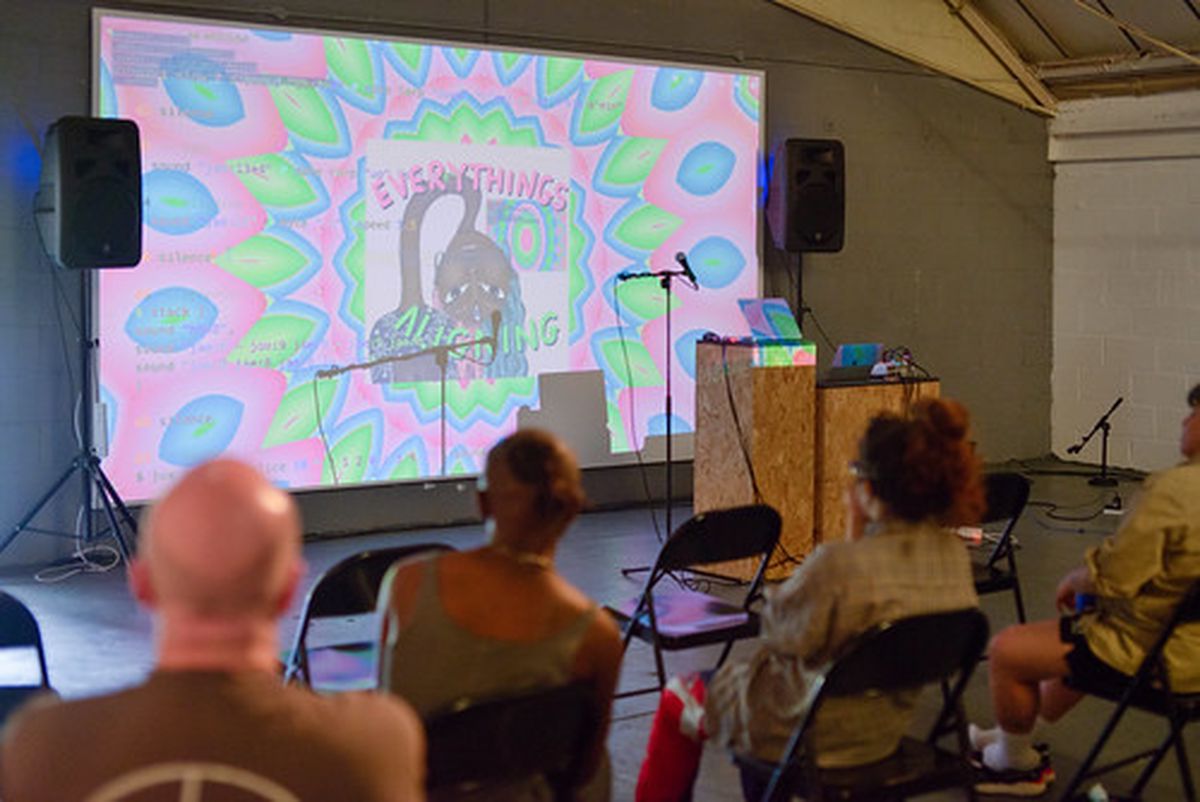
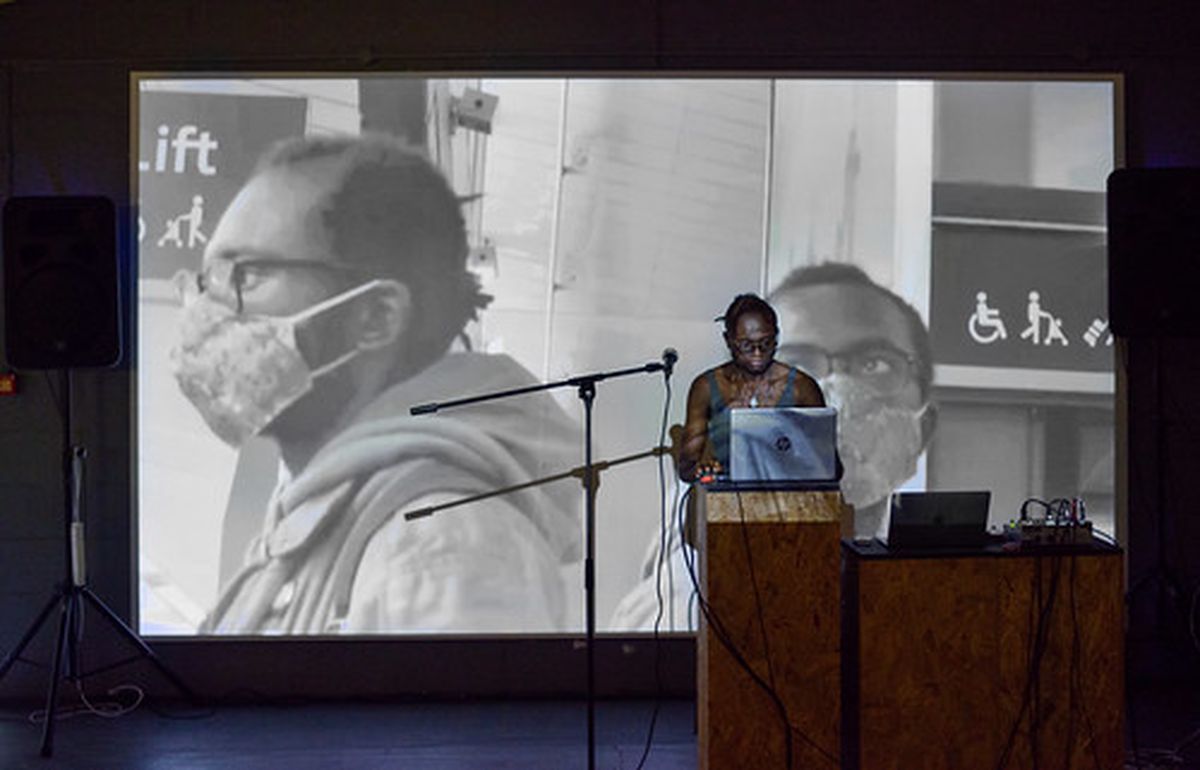
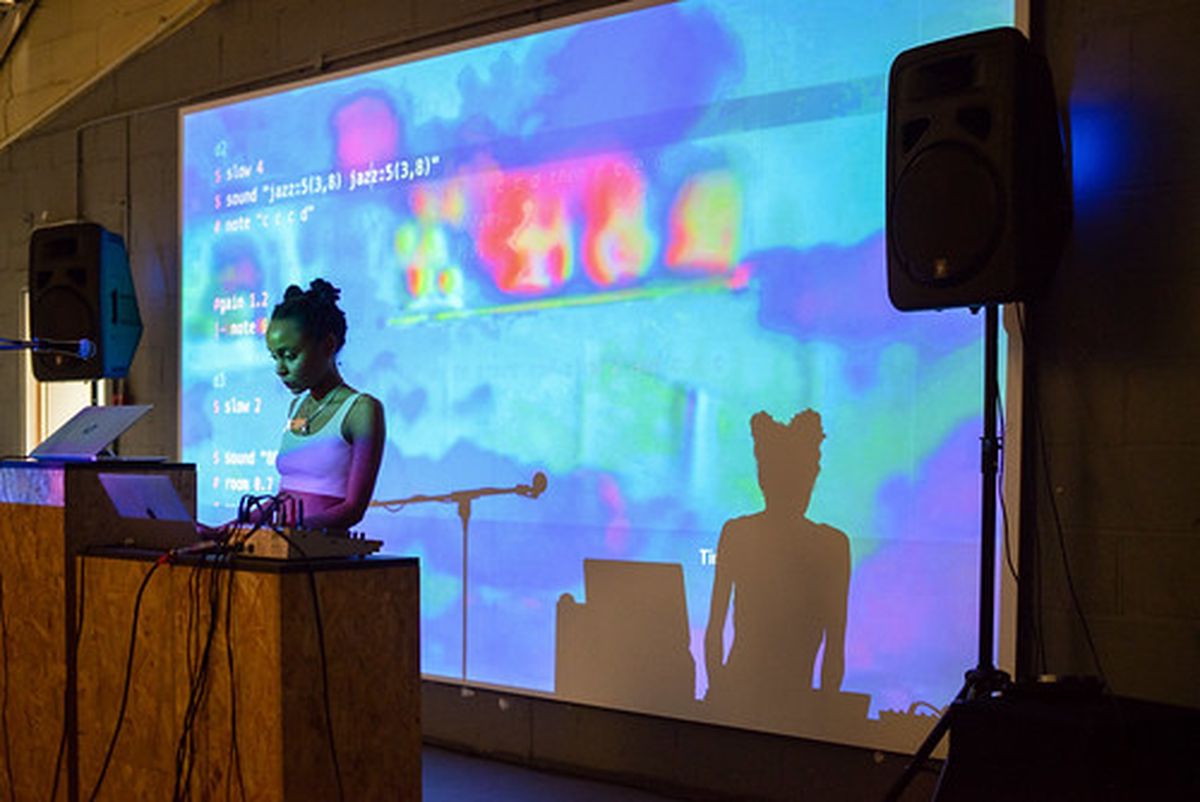
The whole event was live-streamed:
I’m really proud of what they all achieved in just a few short months!
I also made a music video for Affirmation by Echo Juliet
I did an online performance for Flash Crash and then presented some illustration work for Birmingham Design Festival’s Creative City exhibition
Another month of not much output, primarily as I was busy preparing new works. I celebrated my birthday with a performance at an Algorave in Sheffield, my first in-person live coding performance since February 2020!
I also produced a new commission for Beatfreeks’ Youth Trends report. You can see the commission and listen to a discussion I had about art made with data.
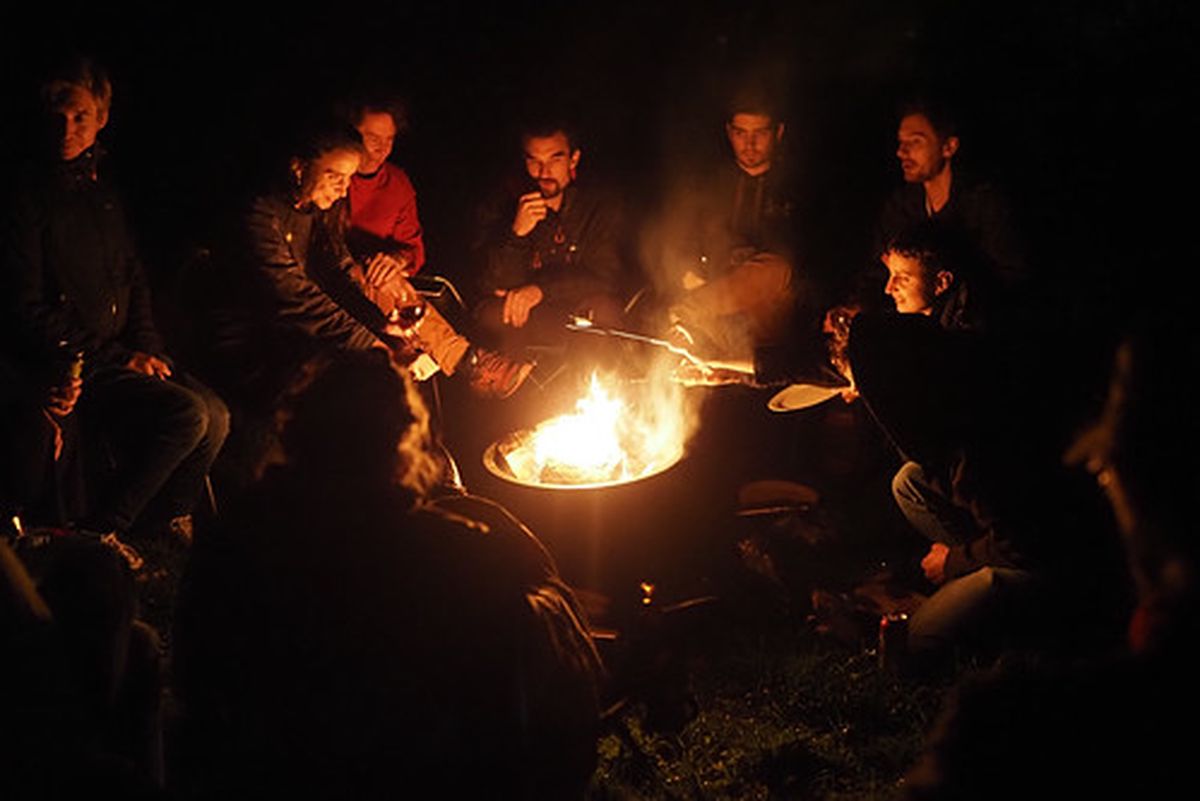
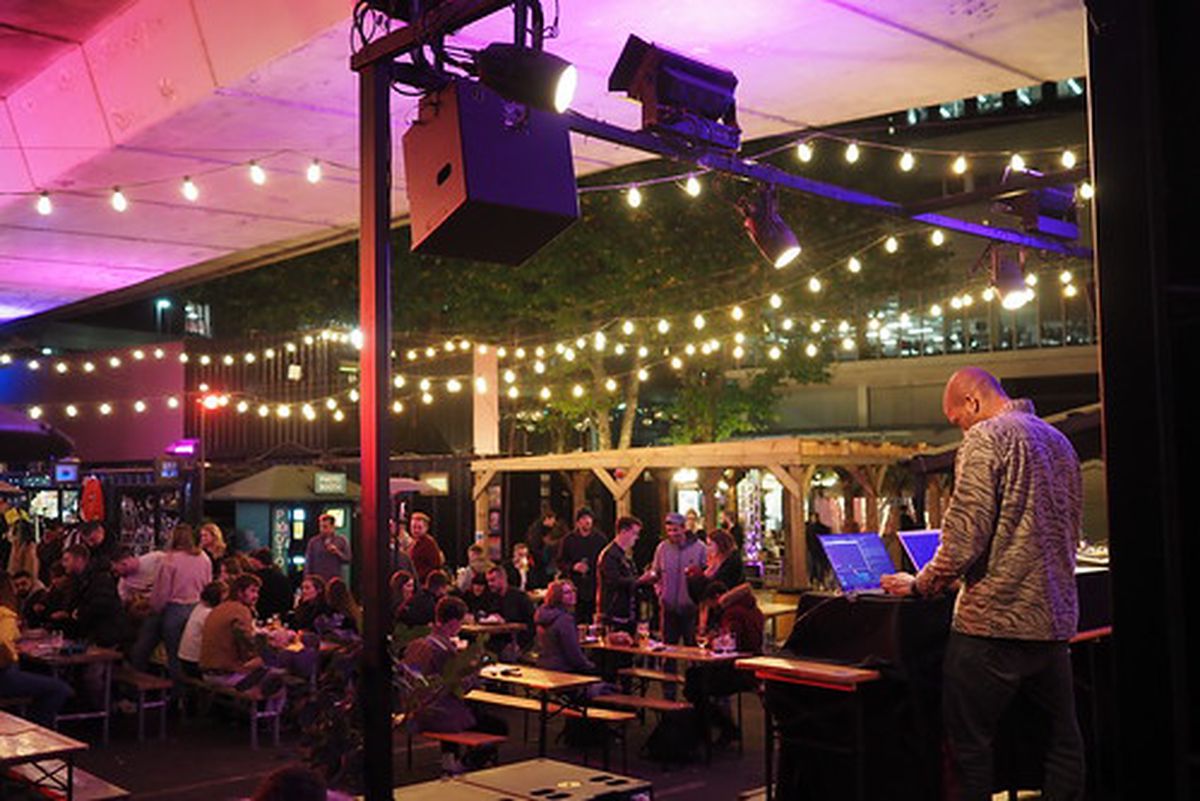
By far my highlight of September was Errorcamp, which saw around 50 live coders spend a few nights in the Lake District. We did some performances, some workshops, and some talks, but the most important thing for me was all of us just being in the same space together. The community aspect of Algorave and live coding is so important and I was really missing the in-person stuff, so I was glad to be there with others :-)
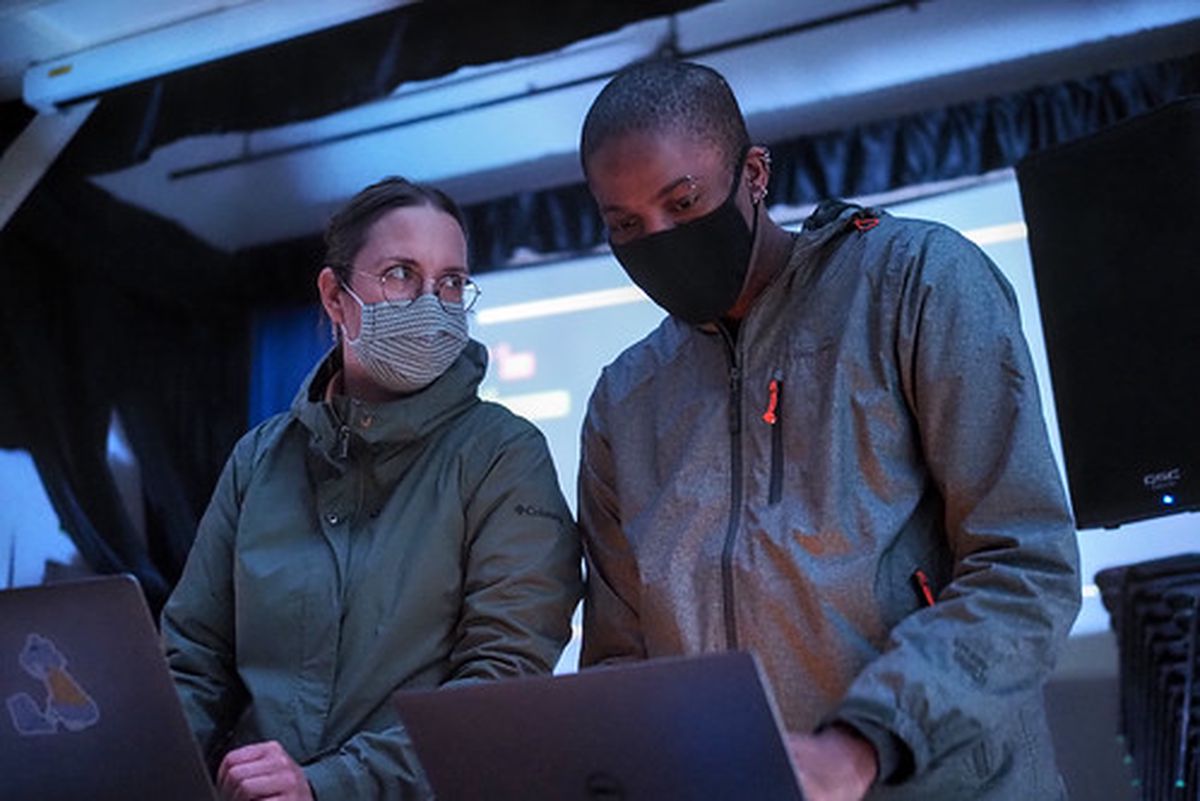
I also appeared as a guest on the BBC Arts & Ideas podcast.
This was a big month! It seems as though almost everything that was postponed in 2020 was rescheduled to take place in October 2021! My month of events started with a couple of performances at No Bounds Festival in Sheffield. Part of it was a presentation of prerecorded performances by (Algo|Afro) Futures participants and music by me, and then I performed visuals with both Alex McLean and eye measure.
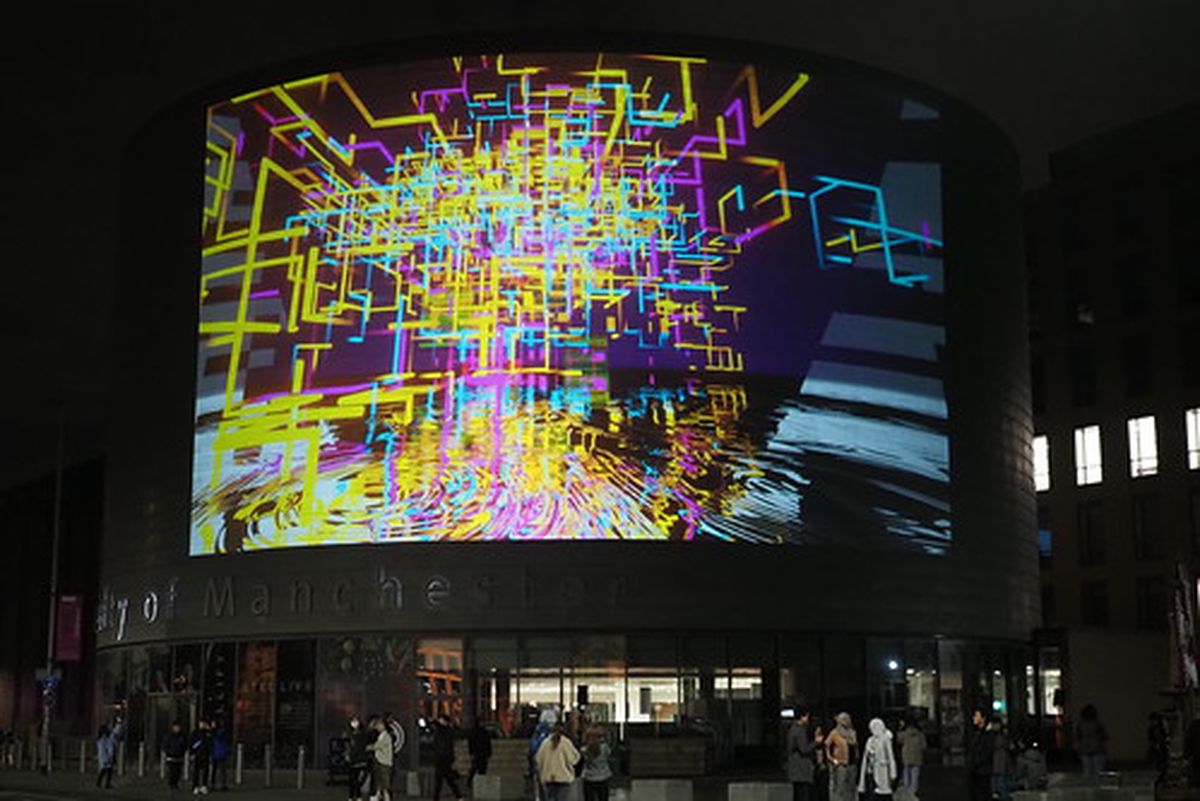
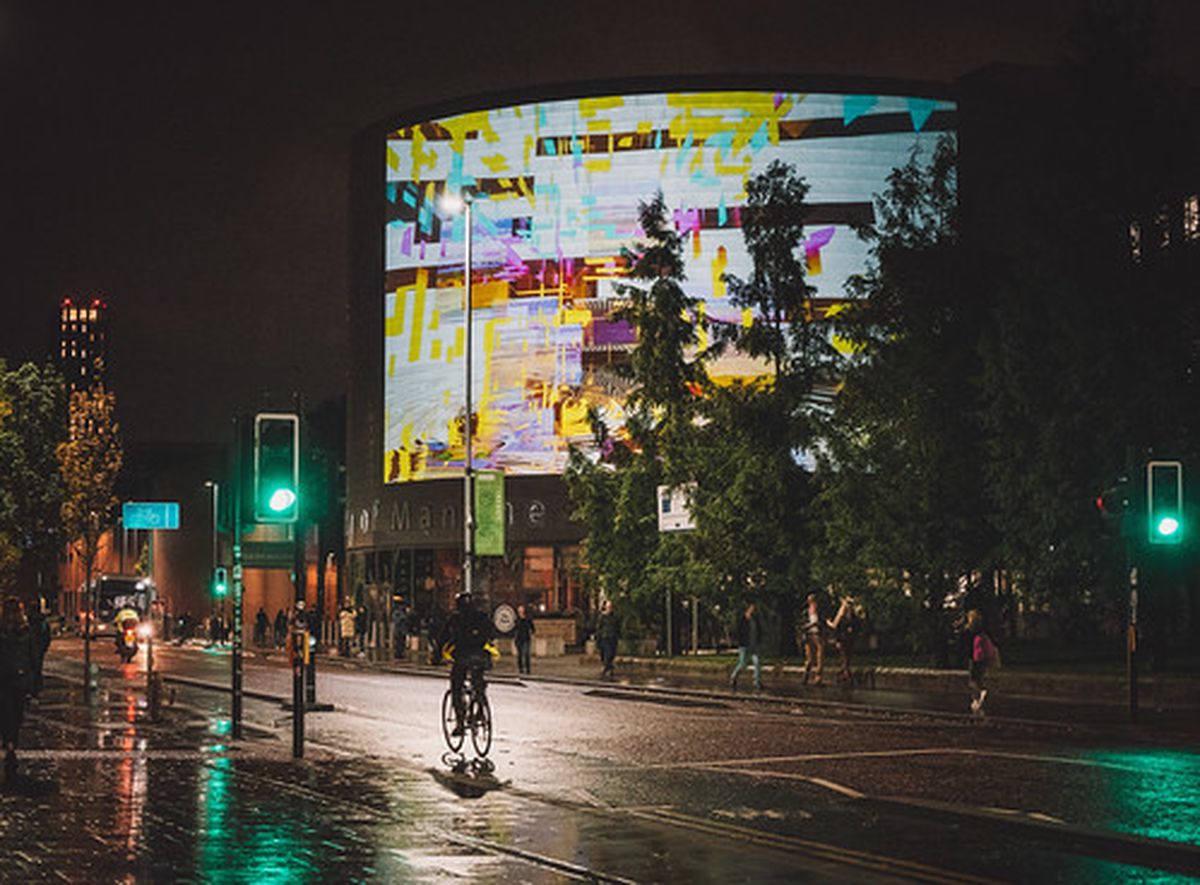
Then, a week later I presented new video work at the Corridor of Light festival in Manchester. The video, Move Fast And B̴͓̝͉͝r̴̞͕̬͒̾̃e̷̜̖̾̊a̸͙̲̾͐́k̴̡̩̥̆͘ Things is quite possibly my biggest projection and was placed in a very prominent position on Oxford Road. It was such a joy to see people stopping and watching the piece.
This was another instance where I was really happy with the music that I made. It was made primarily using TidalCycles which I mostly used as a sequencer, and then did lots of editing in Ardour.
I also co-cutrated an Algorave, which saw Bad Circulation do their only public performance of the year.

The following week I was in Nottingham to deliver a few workshops and then to install my work for the Cut & Mix exhibition at New Art Exchange. The conversations with the exhibition’s curator, Ian Sergent, started in February 2020, and so I’m glad that the exhibition was postponed rather than cancelled.
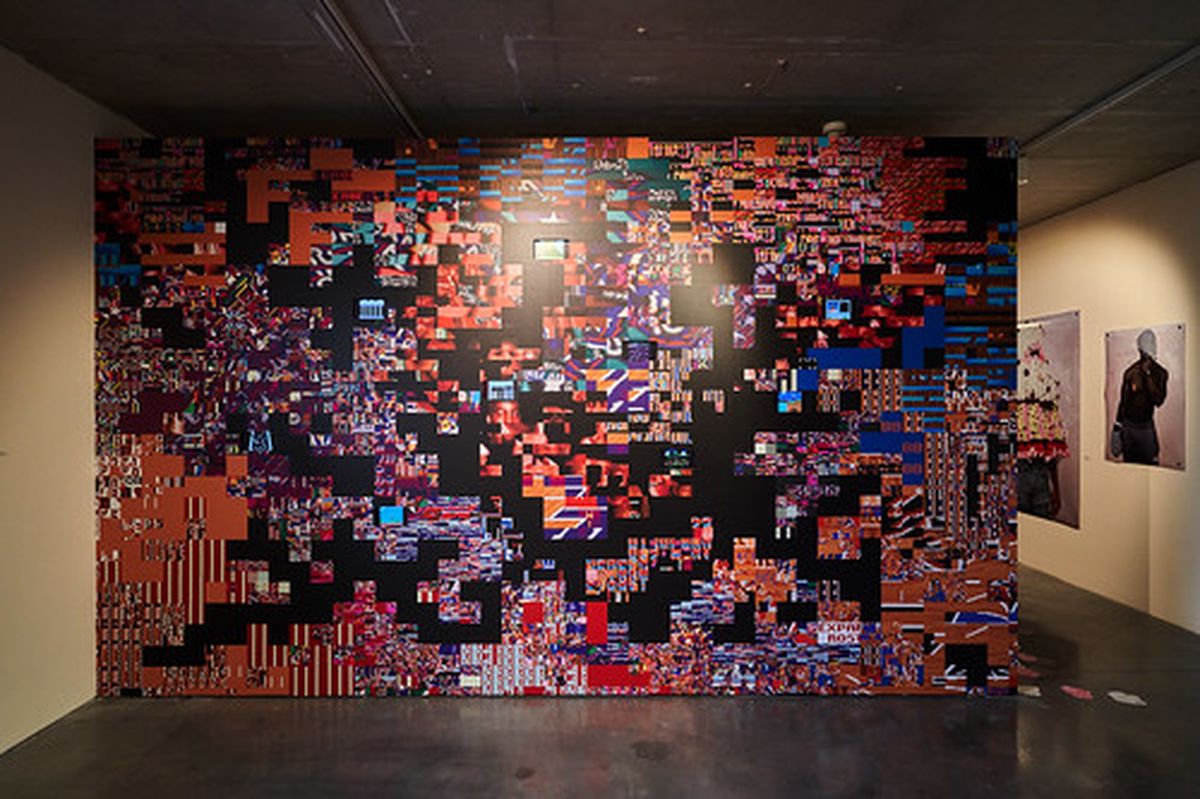
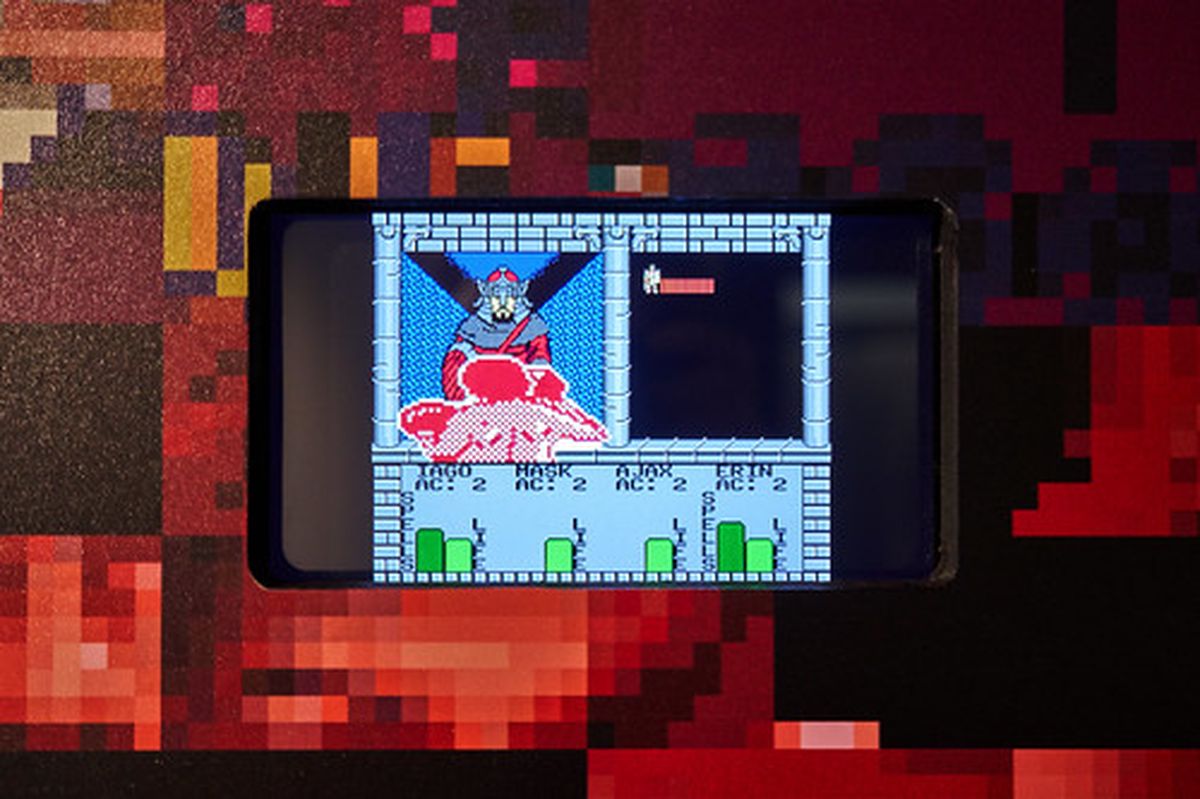
The exhibition is quite close to my heart, and it’s the first time I’ve ever really focused on race in my own work, but it’s something I’ve been wanting to do for a long time. I’m already planning an extension of the work and will definitely talk and write more about the concepts behind it in the future. Also happy to see the exhibition get a mention in the Guardian.
On the same night Careful Networks also launched.
I started running another short course in Blender and then started doing Hydra workshops at Site Gallery in Sheffield.
I also made a variable glitch typeface and some gifs for the Animate Assembly website.

By far the biggest thing was the Concerning Photography event by The Photographers’ Gallery and Paul Melon Centre. I did a keynote artist talk about my practice on the third day of the conference. I’ll update this post with a recording once it’s published.
As usual December was quite quiet. I did a performance for the Between Sound and Concept: Listening with the CCRU event at Coventry Biennial. I was quite ill that day so wasn’t my usual energetic self, but did use it as a chance to do a live debut the Pulse and Nodes tracks. I’m definitely near the point where I’m ready to make an EP or something more official.
I then took part in a discussion with Alexandra Cardenas at ICLC.
We were discussing diversity within the live coding community and the challenges we have both faced in this area. I was really happy to discuss the (Algo|Afro) Futures programme further. In general I really hope that the programme inspires live coders and algoravers in other communities to start their own similar programme. I would hate it if people saw this programme and thought that the work to combat racism is now “done”.
I finished the year by taking part in the TidalClub Longest Night live stream event. My performance was similar to the CCRU set but with a more refined and a new ending piece.
Also in December a remix I provided for Phoneutrian’s Sercle EP was released! My contribution was a remix of the song Crystal Mashup. Lots of other great songs on there!
So that was the year! No specific hopes for the future other than to survive and continue to learn and develop. Vague, I know, but then so is the future.