Glitch

10 years since GLI.TC/H

Exactly 10 years ago the first GLI.TC/H was starting in Chicago, IL. Attending that festival was turning point in my practice and, the more a reflect on it, an important part of my personal life. Here I want to reflect on that a bit.

GLI.TC/H is an international gathering of noise & new media practitioners in Chicago from September 29 thru October 03, 2010!

GLI.TC/H features: realtime audio & video performances with artists who misuse and abuse hardware and software; run-time video screenings of corrupt data, decayed media, and destroyed files; workshops and skill-share-sessions highlighting the wrong way to use and build tools; a gallery show examining glitches as processes, systems, and objects; all in the context of ongoing dialogues that have been fostered by experimentation, research, and play. GLI.TC/H is a physical and virtual assembly which stands testament to the energy surrounding these conversations.
OCR to Text to Speech

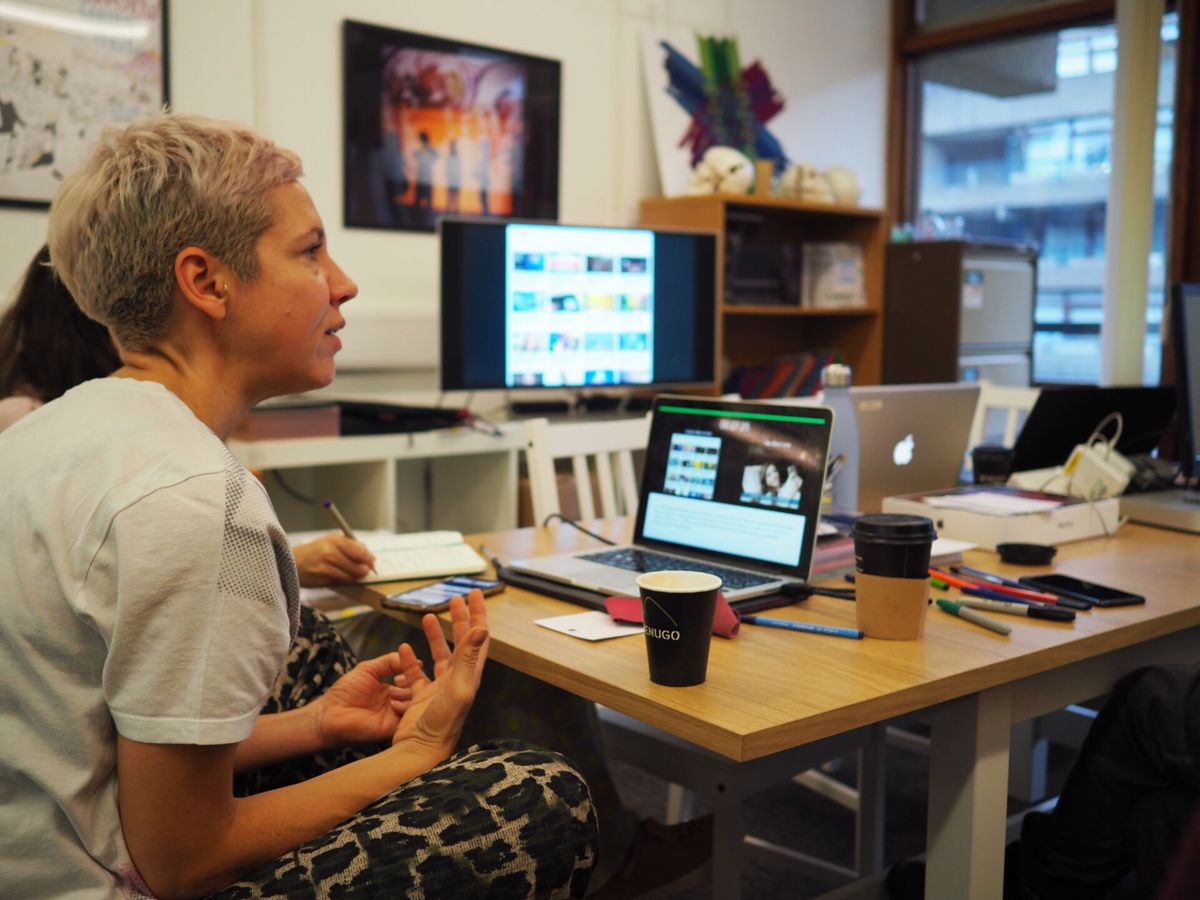
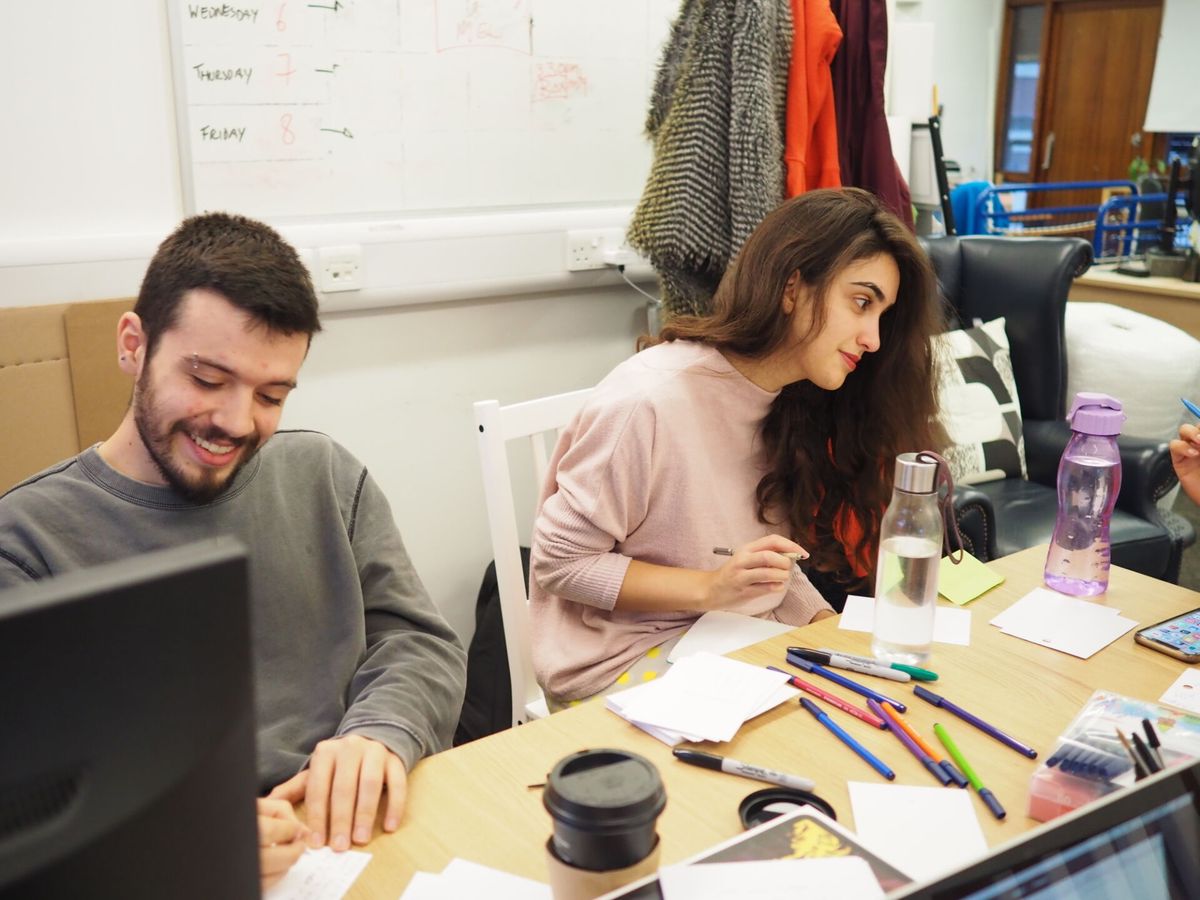
For the sixth video in the Design Yourself series the group worked with artist Erica Scourti. For the activity the participants used optical character recognition software (OCR) to generate poetry from their own handwriting and writing (leaflets, signage) found throughout the Barbican building.

The next stage in the workshop was going to be to take this extracted text and run it through a text to speech synthesizer, but unfortunately there wasn’t time to get to this stage.

Motion Interpolation for Glitch Aesthetics using FFmpeg part 9

Below are a few examples of how you can use FFmpeg’s minterpolate to create artworks with a glitch aesthetic.

You can read about how I used it for an artwork in this blog post. You can also grab the source file for these videos here. Give it a try yourself!

mc_mode=aobmc:me_mode=bilat:me=ds

[video width=“1920” height=“1080” mp4=“https://www.hellocatfood.com/wp-content/uploads/2020/02/033_mc_modeaobmc_me_modebilat_meds.mp4”][/video] [code]ffmpeg -i cat_rainbow_original.mp4 -filter:v “setpts=62.5*PTS,minterpolate=‘fps=25:mb_size=16:search_param=400:vsbmc=0:scd=none:mc_mode=aobmc:me_mode=bilat:me=ds’” 033_mc_mode=aobmc_me_mode=bilat_me=ds.mp4[/code]

mc_mode=aobmc:me_mode=bilat:me=hexbs

[video width=“1920” height=“1080” mp4=“https://www.hellocatfood.com/wp-content/uploads/2020/02/034_mc_modeaobmc_me_modebilat_mehexbs.mp4”][/video] [code]ffmpeg -i cat_rainbow_original.mp4 -filter:v “setpts=62.5*PTS,minterpolate=‘fps=25:mb_size=16:search_param=400:vsbmc=0:scd=none:mc_mode=aobmc:me_mode=bilat:me=hexbs’” 034_mc_mode=aobmc_me_mode=bilat_me=hexbs.mp4[/code]

mc_mode=aobmc:me_mode=bilat:me=epzs

[video width=“1920” height=“1080” mp4=“https://www.hellocatfood.com/wp-content/uploads/2020/02/035_mc_modeaobmc_me_modebilat_meepzs.mp4”][/video] [code]ffmpeg -i cat_rainbow_original.mp4 -filter:v “setpts=62.5*PTS,minterpolate=‘fps=25:mb_size=16:search_param=400:vsbmc=0:scd=none:mc_mode=aobmc:me_mode=bilat:me=epzs’” 035_mc_mode=aobmc_me_mode=bilat_me=epzs.mp4[/code]

Motion Interpolation for Glitch Aesthetics using FFmpeg part 8

Below are a few examples of how you can use FFmpeg’s minterpolate to create artworks with a glitch aesthetic.

You can read about how I used it for an artwork in this blog post. You can also grab the source file for these videos here. Give it a try yourself!

mc_mode=aobmc:me_mode=bilat:me=tss

[video width=“1920” height=“1080” mp4=“https://www.hellocatfood.com/wp-content/uploads/2020/02/029_mc_modeaobmc_me_modebilat_metss.mp4”][/video] [code]ffmpeg -i cat_rainbow_original.mp4 -filter:v “setpts=62.5*PTS,minterpolate=‘fps=25:mb_size=16:search_param=400:vsbmc=0:scd=none:mc_mode=aobmc:me_mode=bilat:me=tss’” 029_mc_mode=aobmc_me_mode=bilat_me=tss.mp4[/code]

mc_mode=aobmc:me_mode=bilat:me=tdls

[video width=“1920” height=“1080” mp4=“https://www.hellocatfood.com/wp-content/uploads/2020/02/030_mc_modeaobmc_me_modebilat_metdls.mp4”][/video] [code]ffmpeg -i cat_rainbow_original.mp4 -filter:v “setpts=62.5*PTS,minterpolate=‘fps=25:mb_size=16:search_param=400:vsbmc=0:scd=none:mc_mode=aobmc:me_mode=bilat:me=tdls’” 030_mc_mode=aobmc_me_mode=bilat_me=tdls.mp4[/code]

mc_mode=aobmc:me_mode=bilat:me=ntss

[video width=“1920” height=“1080” mp4=“https://www.hellocatfood.com/wp-content/uploads/2020/02/031_mc_modeaobmc_me_modebilat_mentss.mp4”][/video] [code]ffmpeg -i cat_rainbow_original.mp4 -filter:v “setpts=62.5*PTS,minterpolate=‘fps=25:mb_size=16:search_param=400:vsbmc=0:scd=none:mc_mode=aobmc:me_mode=bilat:me=ntss’” 031_mc_mode=aobmc_me_mode=bilat_me=ntss.mp4[/code]

Motion Interpolation for Glitch Aesthetics using FFmpeg part 7

Below are a few examples of how you can use FFmpeg’s minterpolate to create artworks with a glitch aesthetic.

You can read about how I used it for an artwork in this blog post. You can also grab the source file for these videos here. Give it a try yourself!

mc_mode=obmc:me_mode=bilat:me=hexbs

[video width=“1920” height=“1080” mp4=“https://www.hellocatfood.com/wp-content/uploads/2020/02/025_mc_modeobmc_me_modebilat_mehexbs.mp4”][/video] [code]ffmpeg -i cat_rainbow_original.mp4 -filter:v “setpts=62.5*PTS,minterpolate=‘fps=25:mb_size=16:search_param=400:vsbmc=0:scd=none:mc_mode=obmc:me_mode=bilat:me=hexbs’” 025_mc_mode=obmc_me_mode=bilat_me=hexbs.mp4[/code]

mc_mode=obmc:me_mode=bilat:me=epzs

[video width=“1920” height=“1080” mp4=“https://www.hellocatfood.com/wp-content/uploads/2020/02/026_mc_modeobmc_me_modebilat_meepzs.mp4”][/video] [code]ffmpeg -i cat_rainbow_original.mp4 -filter:v “setpts=62.5*PTS,minterpolate=‘fps=25:mb_size=16:search_param=400:vsbmc=0:scd=none:mc_mode=obmc:me_mode=bilat:me=epzs’” 026_mc_mode=obmc_me_mode=bilat_me=epzs.mp4[/code]

mc_mode=obmc:me_mode=bilat:me=umh

[video width=“1920” height=“1080” mp4=“https://www.hellocatfood.com/wp-content/uploads/2020/02/027_mc_modeobmc_me_modebilat_meumh.mp4”][/video] [code]ffmpeg -i cat_rainbow_original.mp4 -filter:v “setpts=62.5*PTS,minterpolate=‘fps=25:mb_size=16:search_param=400:vsbmc=0:scd=none:mc_mode=obmc:me_mode=bilat:me=umh’” 027_mc_mode=obmc_me_mode=bilat_me=umh.mp4[/code]

Motion Interpolation for Glitch Aesthetics using FFmpeg part 6

Below are a few examples of how you can use FFmpeg’s minterpolate to create artworks with a glitch aesthetic.

You can read about how I used it for an artwork in this blog post. You can also grab the source file for these videos here. Give it a try yourself!

mc_mode=obmc:me_mode=bilat:me=tdls

[video width=“1920” height=“1080” mp4=“https://www.hellocatfood.com/wp-content/uploads/2020/02/021_mc_modeobmc_me_modebilat_metdls.mp4”][/video] [code]ffmpeg -i cat_rainbow_original.mp4 -filter:v “setpts=62.5*PTS,minterpolate=‘fps=25:mb_size=16:search_param=400:vsbmc=0:scd=none:mc_mode=obmc:me_mode=bilat:me=tdls’” 021_mc_mode=obmc_me_mode=bilat_me=tdls.mp4[/code]

mc_mode=obmc:me_mode=bilat:me=ntss

[video width=“1920” height=“1080” mp4=“https://www.hellocatfood.com/wp-content/uploads/2020/02/022_mc_modeobmc_me_modebilat_mentss.mp4”][/video] [code]ffmpeg -i cat_rainbow_original.mp4 -filter:v “setpts=62.5*PTS,minterpolate=‘fps=25:mb_size=16:search_param=400:vsbmc=0:scd=none:mc_mode=obmc:me_mode=bilat:me=ntss’” 022_mc_mode=obmc_me_mode=bilat_me=ntss.mp4[/code]

mc_mode=obmc:me_mode=bilat:me=fss

[video width=“1920” height=“1080” mp4=“https://www.hellocatfood.com/wp-content/uploads/2020/02/023_mc_modeobmc_me_modebilat_mefss.mp4”][/video] [code]ffmpeg -i cat_rainbow_original.mp4 -filter:v “setpts=62.5*PTS,minterpolate=‘fps=25:mb_size=16:search_param=400:vsbmc=0:scd=none:mc_mode=obmc:me_mode=bilat:me=fss’” 023_mc_mode=obmc_me_mode=bilat_me=fss.mp4[/code]

Motion Interpolation for Glitch Aesthetics using FFmpeg part 5

Below are a few examples of how you can use FFmpeg’s minterpolate to create artworks with a glitch aesthetic.

You can read about how I used it for an artwork in this blog post. You can also grab the source file for these videos here. Give it a try yourself!

mc_mode=aobmc:me_mode=bidir:me=epzs

[video width=“1920” height=“1080” mp4=“https://www.hellocatfood.com/wp-content/uploads/2020/02/017_mc_modeaobmc_me_modebidir_meepzs.mp4”][/video] [code]ffmpeg -i cat_rainbow_original.mp4 -filter:v “setpts=62.5*PTS,minterpolate=‘fps=25:mb_size=16:search_param=400:vsbmc=0:scd=none:mc_mode=aobmc:me_mode=bidir:me=epzs:’” 017_mc_mode=aobmc_me_mode=bidir_me=epzs.mp4[/code]

mc_mode=aobmc:me_mode=bidir:me=umh

[video width=“1920” height=“1080” mp4=“https://www.hellocatfood.com/wp-content/uploads/2020/02/018_mc_modeaobmc_me_modebidir_meumh.mp4”][/video] [code]ffmpeg -i cat_rainbow_original.mp4 -filter:v “setpts=62.5*PTS,minterpolate=‘fps=25:mb_size=16:search_param=400:vsbmc=0:scd=none:mc_mode=aobmc:me_mode=bidir:me=umh’” 018_mc_mode=aobmc_me_mode=bidir_me=umh.mp4[/code]

mc_mode=obmc:me_mode=bilat:me=esa

[video width=“1920” height=“1080” mp4=“https://www.hellocatfood.com/wp-content/uploads/2020/02/019_mc_modeobmc_me_modebilat_meesa.mp4”][/video] [code]ffmpeg -i cat_rainbow_original.mp4 -filter:v “setpts=62.5*PTS,minterpolate=‘fps=25:mb_size=16:search_param=400:vsbmc=0:scd=none:mc_mode=obmc:me_mode=bilat:me=esa’” 019_mc_mode=obmc_me_mode=bilat_me=esa.mp4[/code]

Motion Interpolation for Glitch Aesthetics using FFmpeg part 4

Below are a few examples of how you can use FFmpeg’s minterpolate to create artworks with a glitch aesthetic.

You can read about how I used it for an artwork in this blog post. You can also grab the source file for these videos here. Give it a try yourself!

mc_mode=aobmc:me_mode=bidir:me=ntss

[video width=“1920” height=“1080” mp4=“https://www.hellocatfood.com/wp-content/uploads/2020/02/013_mc_modeaobmc_me_modebidir_mentss.mp4”][/video] [code]ffmpeg -i cat_rainbow_original.mp4 -filter:v “setpts=62.5*PTS,minterpolate=‘fps=25:mb_size=16:search_param=400:vsbmc=0:scd=none:mc_mode=aobmc:me_mode=bidir:me=ntss’” 013_mc_mode=aobmc_me_mode=bidir_me=ntss.mp4[/code]

mc_mode=aobmc:me_mode=bidir:me=fss

[video width=“1920” height=“1080” mp4=“https://www.hellocatfood.com/wp-content/uploads/2020/02/014_mc_modeaobmc_me_modebidir_mefss.mp4”][/video] [code]ffmpeg -i cat_rainbow_original.mp4 -filter:v “setpts=62.5*PTS,minterpolate=‘fps=25:mb_size=16:search_param=400:vsbmc=0:scd=none:mc_mode=aobmc:me_mode=bidir:me=fss’” 014_mc_mode=aobmc_me_mode=bidir_me=fss.mp4[/code]

mc_mode=aobmc:me_mode=bidir:me=ds

[video width=“1920” height=“1080” mp4=“https://www.hellocatfood.com/wp-content/uploads/2020/02/015_mc_modeaobmc_me_modebidir_meds.mp4”][/video] [code]ffmpeg -i cat_rainbow_original.mp4 -filter:v “setpts=62.5*PTS,minterpolate=‘fps=25:mb_size=16:search_param=400:vsbmc=0:scd=none:mc_mode=aobmc:me_mode=bidir:me=ds’” 015_mc_mode=aobmc_me_mode=bidir_me=ds.mp4[/code]

Motion Interpolation for Glitch Aesthetics using FFmpeg part 3

Below are a few examples of how you can use FFmpeg’s minterpolate to create artworks with a glitch aesthetic.

You can read about how I used it for an artwork in this blog post. You can also grab the source file for these videos here. Give it a try yourself!

mc_mode=obmc:me_mode=bidir:me=umh

[video width=“1920” height=“1080” mp4=“https://www.hellocatfood.com/wp-content/uploads/2020/02/009_mc_modeobmc_me_modebidir_meumh.mp4”][/video] [code]ffmpeg -i cat_rainbow_original.mp4 -filter:v “setpts=62.5*PTS,minterpolate=‘fps=25:mb_size=16:search_param=400:vsbmc=0:scd=none:mc_mode=obmc:me_mode=bidir:me=umh’” 009_mc_mode=obmc_me_mode=bidir_me=umh.mp4[/code]

mc_mode=aobmc:me_mode=bidir:me=esa

[video width=“1920” height=“1080” mp4=“https://www.hellocatfood.com/wp-content/uploads/2020/02/010_mc_modeaobmc_me_modebidir_meesa.mp4”][/video] [code]ffmpeg -i cat_rainbow_original.mp4 -filter:v “setpts=62.5*PTS,minterpolate=‘fps=25:mb_size=16:search_param=400:vsbmc=0:scd=none:mc_mode=aobmc:me_mode=bidir:me=esa’” 010_mc_mode=aobmc_me_mode=bidir_me=esa.mp4[/code]

mc_mode=aobmc:me_mode=bidir:me=tss

[video width=“1920” height=“1080” mp4=“https://www.hellocatfood.com/wp-content/uploads/2020/02/011_mc_modeaobmc_me_modebidir_metss.mp4”][/video] [code]ffmpeg -i cat_rainbow_original.mp4 -filter:v “setpts=62.5*PTS,minterpolate=‘fps=25:mb_size=16:search_param=400:vsbmc=0:scd=none:mc_mode=aobmc:me_mode=bidir:me=tss’” 011_mc_mode=aobmc_me_mode=bidir_me=tss.mp4[/code]

Motion Interpolation for Glitch Aesthetics using FFmpeg part 2

Below are a few examples of how you can use FFmpeg’s minterpolate to create artworks with a glitch aesthetic.

You can read about how I used it for an artwork in this blog post. You can also grab the source file for these videos here. Give it a try yourself!

mc_mode=obmc:me_mode=bidir:me=fss

[video width=“1920” height=“1080” mp4=“https://www.hellocatfood.com/wp-content/uploads/2020/02/005_mc_modeobmc_me_modebidir_mefss.mp4”][/video] [code]ffmpeg -i cat_rainbow_original.mp4 -filter:v “setpts=62.5*PTS,minterpolate=‘fps=25:mb_size=16:search_param=400:vsbmc=0:scd=none:mc_mode=obmc:me_mode=bidir:me=fss’” 005_mc_mode=obmc_me_mode=bidir_me=fss.mp4[/code]

mc_mode=obmc:me_mode=bidir:me=ds

[video width=“1920” height=“1080” mp4=“https://www.hellocatfood.com/wp-content/uploads/2020/02/006_mc_modeobmc_me_modebidir_meds.mp4”][/video] [code]ffmpeg -i cat_rainbow_original.mp4 -filter:v “setpts=62.5*PTS,minterpolate=‘fps=25:mb_size=16:search_param=400:vsbmc=0:scd=none:mc_mode=obmc:me_mode=bidir:me=ds’” 006_mc_mode=obmc_me_mode=bidir_me=ds.mp4[/code]

mc_mode=obmc:me_mode=bidir:me=hexbs

[video width=“1920” height=“1080” mp4=“https://www.hellocatfood.com/wp-content/uploads/2020/02/007_mc_modeobmc_me_modebidir_mehexbs.mp4”][/video] [code]ffmpeg -i cat_rainbow_original.mp4 -filter:v “setpts=62.5*PTS,minterpolate=‘fps=25:mb_size=16:search_param=400:vsbmc=0:scd=none:mc_mode=obmc:me_mode=bidir:me=hexbs’” 007_mc_mode=obmc_me_mode=bidir_me=hexbs.mp4[/code]

Motion Interpolation for Glitch Aesthetics using FFmpeg part 1

Below are a few examples of how you can use FFmpeg’s minterpolate to create artworks with a glitch aesthetic.

You can read about how I used it for an artwork in this blog post. You can also grab the source file for these videos here. Give it a try yourself!

mc_mode=obmc:me_mode=bidir:me=esa

[video width=“1920” height=“1080” mp4=“https://www.hellocatfood.com/wp-content/uploads/2020/02/001_mc_modeobmc_me_modebidir_meesa.mp4”][/video]

[code]ffmpeg -i cat_rainbow_original.mp4 -filter:v “setpts=62.5*PTS,minterpolate=‘fps=25:mb_size=16:search_param=400:vsbmc=0:scd=none:mc_mode=obmc:me_mode=bidir:me=esa’” 001_mc_mode=obmc_me_mode=bidir_me=esa.mp4[/code]

mc_mode=obmc:me_mode=bidir:me=tss

[video width=“1920” height=“1080” mp4=“https://www.hellocatfood.com/wp-content/uploads/2020/02/002_mc_modeobmc_me_modebidir_metss.mp4”][/video]

[code]ffmpeg -i cat_rainbow_original.mp4 -filter:v “setpts=62.5*PTS,minterpolate=‘fps=25:mb_size=16:search_param=400:vsbmc=0:scd=none:mc_mode=obmc:me_mode=bidir:me=tss’” 002_mc_mode=obmc_me_mode=bidir_me=tss.mp4[/code]

mc_mode=obmc:me_mode=bidir:me=tdls

[video width=“1920” height=“1080” mp4=“https://www.hellocatfood.com/wp-content/uploads/2020/02/003_mc_modeobmc_me_modebidir_metdls.mp4”][/video]

Motion Interpolation for Glitch Aesthetics using FFmpeg part 0

As you may have seen in this blog post I made use of FFmpeg’s minterpolate motion interpolation options to make all of the faces morph. There’s quite a few options for minterpolate and many different combinations of options that can be used. i had to consult Wikipedia to figure out exactly what the different motion estimation algorithms were but even with that information I couldn’t visualise how it would change the output. To add to this how I’m using minterpolate isn’t a typical use case.

Granular: The Material Properties of Noise, 16th January - 3rd February

From 16th January - 3rd February my 2016 piece Transformative Use will be on show at University of Greenwich as part of Granular: The Material Properties of Noise.

Granular noise is explored as a condition of material transfer in this exhibition. A central concern across the works on display is the material state change that occurs within the processes of mediation. Here, disintegration and/or reintegration of elements at a granular level is encountered as a mode of transference between states, whether physical or digital, and as a phase at which a thing starts or ceases to be.

Basquiat's Brain, 12th - 28th January 2018

From 12th - 28th January a series of animated portraits, developed in response to the Boom for Real Basquiat exhibition, will be on display at Barbican.

Barbican young creatives, along with artist and curator Antonio Roberts, present a collection of work in response to Basquiat: Boom for Real

Artist and curator Antonio Roberts worked with a group of Barbican young creatives over three months to create artwork in response to the exhibition Basquiat: Boom for Real currently showing in the Barbican Art Gallery.

MTV Visual Ident

I’m happy to finally share with the internet (and the TV) the visual ident I made for MTV

If you’re living anywhere except for the US or UK you can see it on your TV screens. For eveyrone else there’s the internet! A massive thanks goes to MTV for inviting me to make an ident - a process which I’ll hopefully write about soon.

mtv_1

mtv_2

mtv_3

Glitch GIMP

On Wednesday 29th April I gave my Allowing Mistakes to Happen presentation at Libre Graphics Meeting in Toronto. I was quite anxious about this because the attendees are, typically, developers of software and/or graphic designers. Looking through the archives I found only a comparatively small amount of presentations from artists talking about their artwork and even fewer from those you might call experimental artists (glitch art, generative art etc).

My fears were put to rest somewhat once my presentation actually happened. Despite my computer crashing towards the end (glitch lol) it seems to have struck a chord with many of the attendees. It seemed that they liked that I was turning bugs and the bug hunting process into a form of art.

JPG Glitch Pattern Generator

Back in January I posted some images of funky patterns. Today I’m formally releasing the script that brought the funk.

JPG Glitch Pattern Generator

JPG Glitch Pattern Generator

Download them from Github.

The first script, pattern_generator.sh, works by exploiting jpg compression on randomly generated images. The script starts by generating a 10px x 10px iamge containing three colours:

100px100px

It then iteratively decreasese the quality of these images from 78 (or whatever quality you change it to) down to 0. It does this a number of times - defined in loop - whilst also scaling the image by 410% at the end of each loop.

Pure Data File Killer

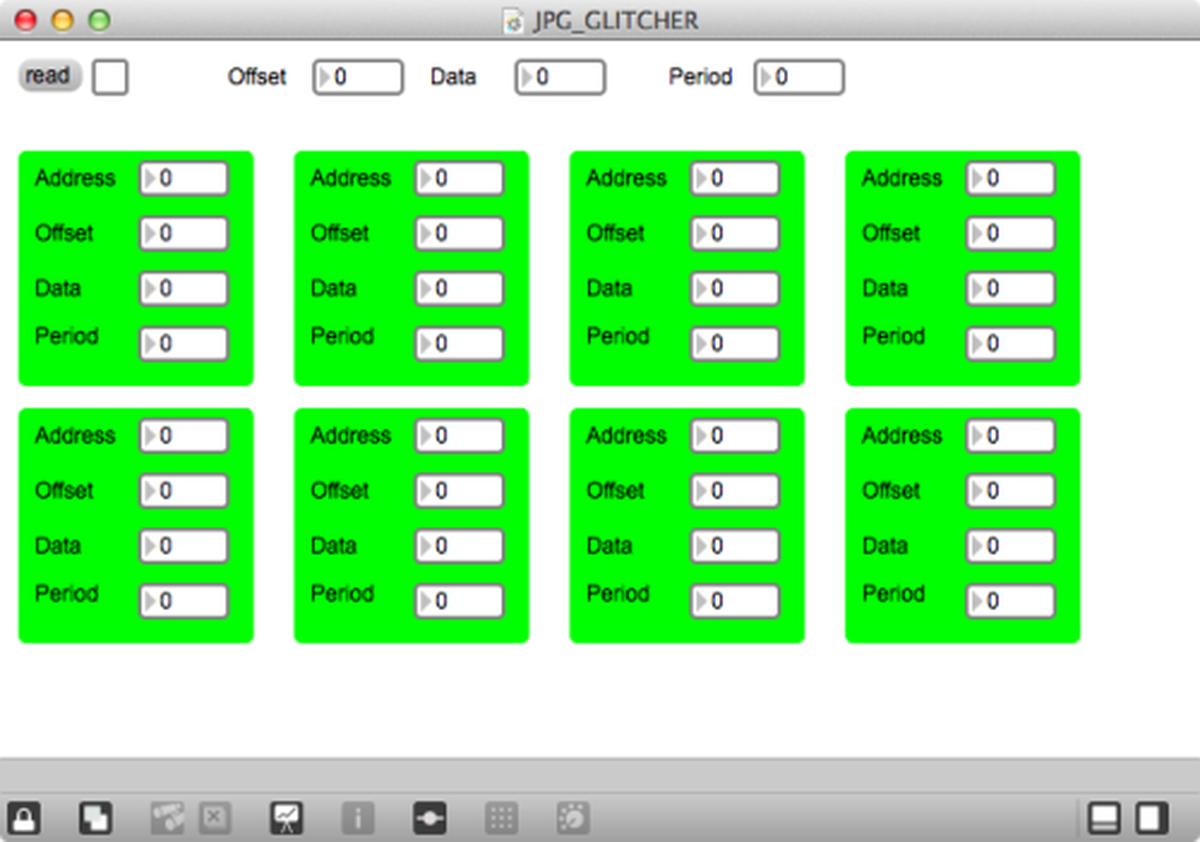
On one of my frequent journeys on the information superhighway I stumbled across Little-Scale’s Mass JPG Killer. This handy little patch allows a user to load any binary file and “glitch” it by overwriting some of the original data with a repeating pattern of user-defined data.

Mass JPG Killer by Little-Scale

The only problem (for me and people like me) is that I don’t have Max/MSP and can’t install it on Linux, meaning I’ve never actually used it!

The Transnational Glitch

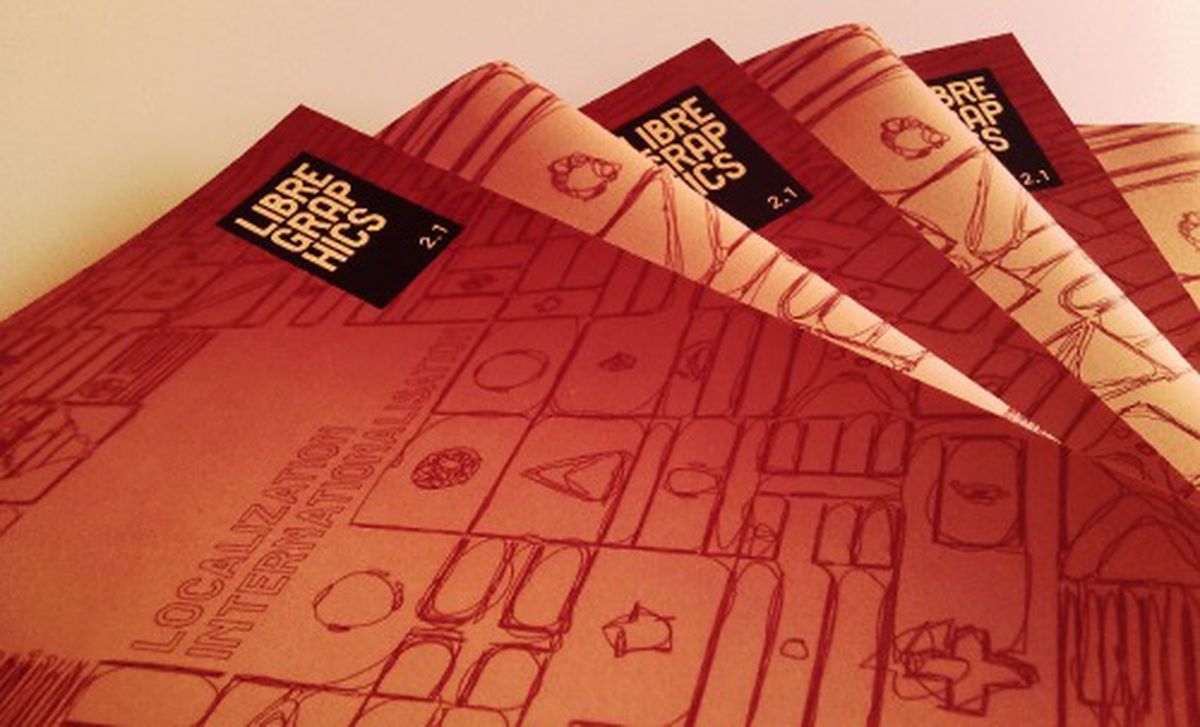
Below is my article for Volume 2, Issue 1 of Libre Graphics magazine. You can still buy the issue or download it from their website.

American English is the common language of computing and the internet. That’s quite unfortunate. There are indeed many talented non-English speakers building our websites and shaping our digital future. That potential aside, one only has to look at the programming languages themselves and even small things like web addresses to see a bias towards English. Functions in popular programming languages are derived from English and, while websites that are not in English exist, their URLs are always in English, with only the domain extension (.fr, .pt, .es, .cn, etc.) available to give the website a sense of cultural identity.

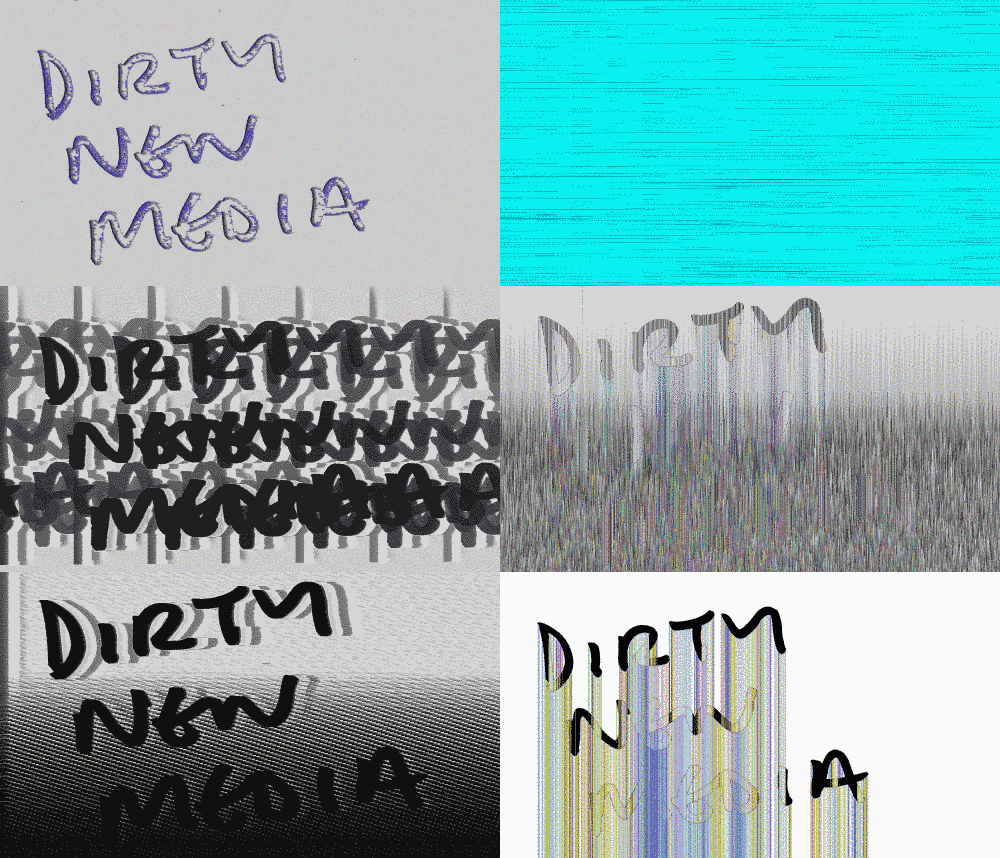
Dirty New Media

Dirty New Media took place on Thursday 21st March at The Barber Institute of Fine Arts. It was one of the most adventurous exhibitions that I’ve curated!

Thanks go out to:

Here’s a list of all of the works/pieces/artists included in the programme, should you want to check out more:

Dirty New Media preview: 1_approach.dnm: (inter)active viewership in dirty new media

Dirty New Media will be making its way to The Barber Institute of Fine Arts on 21st March as part of the University of Birmingham’s Arts and Science Festival.

Super Special Essay

Shawne Holloway + Steven Hammer - 1_approach.dnm: (inter)active viewership in dirty new media

The invisibility of various technologies, interfaces, and wares, via their often seductive and seamless interfaces, fosters a kind of cultural ocularcentrism[1] vis-a-vis capitalist consumerism. Dirty New Media (DNM) seeks to disengage our perception of screen-based activity from the two-dimensional, and critique material production of objects and systems that produce, curate, and guide reception of various texts.

Dirty New Media preview: A/V Performances

Dirty New Media will be making its way to The Barber Institute of Fine Arts on 21st March as part of the University of Birmingham’s Arts and Science Festival. Over the week I’ll be providing an overview of the upcoming event.

AV Performances | 7-10pm

Minuek

Circuit Ben

Norah Lorway

Meta

Dirty New Media // REVOLUTION 02

THURSDAY 21 MARCH | 4-10PM | THE BARBER INSTITUTE, BIRMINGHAM

An engaging day of performances and interactive installations from digital artists, hacktivists and new media explorers from the West Midlands, Chicago and beyond. Artworks take the form of hacked and customised hardware, accessories, demos, lectures, data-mangling, projection and more!

Dirty New Media preview: Screenings part 2

Dirty New Media will be making its way to The Barber Institute of Fine Arts on 21st March as part of the University of Birmingham’s Arts and Science Festival. Over the week I’ll be providing an overview of the upcoming event.

Screenings | 6-7pm

Modulate - O>L>S

modulate_video Description: A short audio visual journey exploring abstract narrative, movement, shape, colour, non verbal expression and spatial awareness. Sounds sourced from “The Octophonic Loop System"8.1 sound installation by Bobby Bird /Modulate, commissioned by Francisco Lopez.

Dirty New Media preview: Screenings part 3

Dirty New Media will be making its way to The Barber Institute of Fine Arts on 21st March as part of the University of Birmingham’s Arts and Science Festival. Over the week I’ll be providing an overview of the upcoming event.

Screenings | 6-7pm

Michael Lightborne - What Did The Duck Say To The Pig?

michaellightborne_video A stupid joke, told badly.

Bryan Peterson - [Dirty] inputs/processes.outputs

bryanpeterson_video Appropriated Phil Morton video, twisted and built through analog video mixers

Dirty New Media preview: Exhibition part 3

Dirty New Media will be making its way to The Barber Institute of Fine Arts on 21st March as part of the University of Birmingham’s Arts and Science Festival. Over the week I’ll be providing an overview of the upcoming event.

Exhibition | 4-10pm

Jamie Boulton - C:\Users\5629a7\Pictures\IDDisplay.jpg

jamieboulton_database > Applying reality safeguards… > Discarding morality values… > Deactivating motivation protocol… > Accessing Internet Database… > Initialising… > Ready.

URRRGH - __KWEEN_CLARISSURRRGH, __YOUCHOOB_4_EVA, __ALADDINZ_CAT

urrrgh_kween

Dirty New Media preview: Lectures

Dirty New Media will be making its way to The Barber Institute of Fine Arts on 21st March as part of the University of Birmingham’s Arts and Science Festival. Over the week I’ll be providing an overview of the upcoming event.

Lectures | 4-6pm

Jon Cates - WTF?! is D1RTY N3W M3DI∆?!

joncates

Dan O’Hara - An Irregular and Spasmodic History of Glitches and other Systemic Stutterings

danohara Glitches interrupt the smooth realism of our mediated experience of the everyday world, from malfunctioning train announcement boards to distorted video streams and white noise in our phone calls. But is it only machines that glitch, or does ‘glitching’ exist in nature too?

Dirty New Media preview: Optical Theremin Workshop

Dirty New Media will be making its way to The Barber Institute of Fine Arts on 21st March as part of the University of Birmingham’s Arts and Science Festival. Over the week I’ll be providing an overview of the upcoming event.

Workshop | 12-2pm

Optical Theremin workshop with Circuit Ben

An optical theremin is a motion-operated instrument, based on an LM386 op-amp chip, we’ll be building them from scratch, learning the basic principles behind audio manipulation using voltage, and making some unholy racket! No soldering experience necessary.

Dirty New Media preview: Screenings part 1

Dirty New Media will be making its way to The Barber Institute of Fine Arts on 21st March as part of the University of Birmingham’s Arts and Science Festival. Over the week I’ll be providing an overview of the upcoming event.

Screenings | 6-7pm

Theodore Darst - Approach

theodoredarst_video Following a group shows’ theme of “home in the digital age”, Approach utilizes 3D modeling software to create a private digital sculpture garden textured, in part, with personal screenshots.

Dirty New Media preview: Exhibition part 1

Dirty New Media will be making its way to The Barber Institute of Fine Arts on 21st March as part of the University of Birmingham’s Arts and Science Festival. Over the week I’ll be providing an overview of the upcoming event.

Exhibition | 4-10pm

Kate Pemberton - Tracert

katepemberton_tracert Tracert (pronounced trace route) is an examination of how traditional craft ideas translate into the modern multi-media networked world. A sampler has been cross-stitched by hand from a transposed graphic of a tracert DOS command.

Dirty New Media, 21.03.2013

An engaging day of performances and interactive installations from digital artists, hacktivists and new media explorers from the West Midlands, Chicago and beyond. Artworks take the form of hacked and customised hardware, accessories, demos, lectures, data-mangling, projection and more!

This eclectic, expectation bending event is presented by Vivid Projects in association with artist/curator Antonio Roberts and The Barber institute of Fine Arts.

Dirty New Media

/-;-/-;-/– AV Performances –\-;-\-;-\ 7 – 10pm

Minuek Norah Lorway Circuit Ben

Libre Graphics Magazine 2.1 - Localisation/Internationalization

I’m happy to announce that I’ll have a regular column in volume two of Libre Graphics magazine, starting with the first issue, Localisation/Internationalization

Libre Graphics Magazine 2.1

This February, Libre Graphics Magazine has reached a major milestone. We have published and shipped issue 2.1, the first number in our second volume. Titled “Localization/Internationalisation,” this issue explores the unique problems of non-latin type, the hyper-localisation of custom clothing patterns and international visual languages, among other topics.

AlphabeNt: Experiments from A–Z

AlphabeNt, the book which I wrote the foreword for and spoke briefly about at GLI.TC/H 2112, is out now for either $30AUD or $70AUD (special edition)

AlphabeNt: Experiments from A–Z presents the 26 characters of the Latin alphabet as you haven’t seen them before: broken, distorted and aesthetically corrupted using digitally destructive techniques not usually found in the designers handbook. Co-authors Drew Taylor and Daniel Purvis created the characters using audio editing software such as Audacity, using standard text editors, by overloading flatbed document scanners, shaking iPhones and kicking computer tables.

The making of Comic Sans Must Die

Comics Sans Must Die ended some time during the week of GLI.TC/H 2112. Although it only lasted just over a month long, the creation of Comic Sans Must Die actually started in July 2010 when I stumbled across the Geomerative library for Processing as a way to manipulate SVG files. After a bit of fiddling with one of the example files I was able to take (almost) any SVG file and gradually reduce it over time.

Glitch Webcam

Glitch Webcam* is a small script that was developed during my time at Databit.me as part of the Open Camera project, which aimed at finding inexpensive ways to take images. Since then it has been in the MEMIC exhibition in November 2012 and usually makes an appearance wherever my laptop goes.

At only five lines of code and ~254 bytes, this script is a very quick way to glitch photos taken automatically by a webcam. The project was originally demoed using a Raspberry Pi/Raspbian and a digital photo frame, though problems with USB have prevented me from doing that since.

FRAME_Birmingham

FRAME_birmingham, the three-month long exhibition of artwork by national and international artists at venues across Birmingham, is now in its second month. Fade to Daft has been taken down from the Penfold Grange Suite of Hotel du Vin, but it can still be purchased online for £180. The next piece in that series, Plenty, can be seen in Birmingham Central Library, near the entrance to the lending library. The image is an image remix of the song Plenty by Rob Crow/Thingy.

Comic Sans Must Die

Comic Sans Must Die

Love it or hate it, Comic Sans is one of the most popular fonts in the world.

Vincent Connare designed the font for Microsoft in 1995. He described it is best being used for “new computer users and families with children”. Despite this it has constantly been misused and can be seen everywhere from school letters, e-mails from government officials and even in documents about the discovery of the Higgs Boson.

Create jpgs in Pure Data

For Some of My Favourite Songs I utilised Pure Data Extended (I’m using a beta version) to read the audio files and then save them as images. Pure Data is usually used for the production of music and/or generative live visuals, so to using it to produce jpg images from almost nothing, or random data input is quite new to me!

In search of a jpg header

The most important part of this process is knowing how to construct and apply a jpg header to data. Wikipedia informed me that all jpg images begin with FF D8. I thought that all I would need to do is use a hex editor, such as Ghex or Bless Hex Editor, to add those byte values to a file.

Interview for Jamie Boulton

I was recently interviewed by Jamie Boulton for his final-year dissertation. He is currently studying Visual Communication at Birmingham City University, where he’s recently become very interested in glitch art. Below is the whole interview, with links and pictures added by me.

First of all, what is your definition of a glitch?

A glitch is an error or something unexpected.

How did you first come in contact with glitch art? What were your initial impressions of it and what made you pursue it as an art form?

CóRM

CóRM

CóRM

CóRM

CóRM

A series of self-portraits. The title comes from a random string that was found in one of the images

More here

GLITCH COP!3R

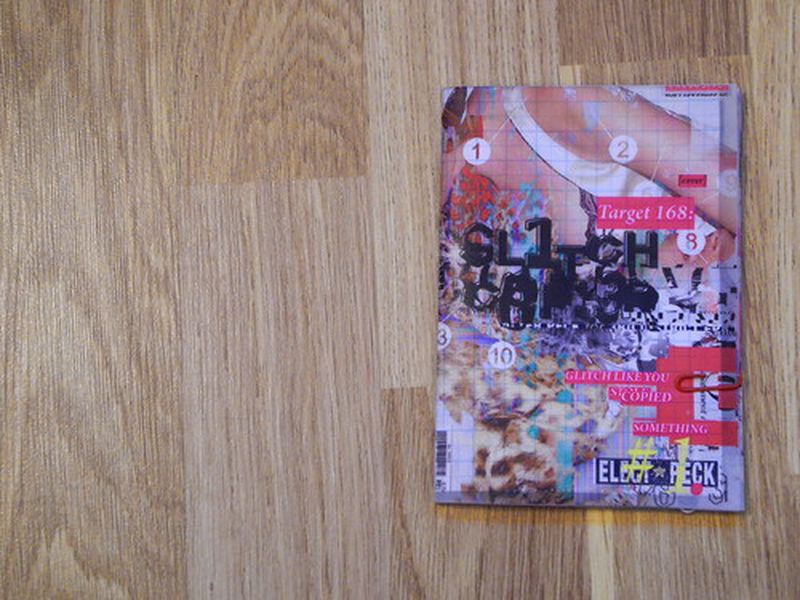
I recently got a very nice package in the post all the way from Australia! Drew Taylor (aka bowsneak) sent me a package of art and zines, one of which was GLITCH COP!3R

[caption id="" align=“alignnone” width=“500” caption=“GLITCH COP!3R”]GLITCH COP!3R [/caption]

[GLITCH COP!3R] was created as part of Sticky Institutes Target 168 2012 zinemaking challenge, in which a zine had to be created within 168 hours (1 week). The ‘secret’ theme for the challenge was ‘C3100 photo copier’.

Feedback Loops in Pure Data

Recently I’ve been making a few video loops for Dreambait Recordings to use in their shows. The videos, made using video samples and Pure Data, focus on feedback loops. For BYOB Birmingham on Friday 16th March I decided to showcase these video feedbcak creations. Some photos of it in action:

BYOB Birmingham

[caption id="" align=“alignnone” width=“500” caption=“Photo by minuek”]BYOB Birmingham Flatpack Festival 2012 [/caption]

Alpha Glitch

For my performance with Freecode as part of Network Music Festival I wanted to move away from producing visuals that consisted mostly of video playback and move towards generative art. Demos of this were posted on my Flickr site, and the first performance that utilised this new approach happened on 26th January

The feedback from people online and at the performance was really positive, with a lot of people were asking how to do something similar. The patch I made for it was very messy so I (albeit slowly) remade part of the patch that achieves that effect. It’s available for download below

Can Glitch Art go public?

A few weeks ago I put forward a proposal for a public art project that focuesd on augmented reality. There could be some confusion over what is meant by public art (if a gallery/event is free to enter isn’t it public?) so I’ll borrow the definition from Wikipedia, which, for all its faults provides a darn good definition:

The term public art properly refers to works of art in any media that have been planned and executed with the specific intention of being sited or staged in the physical public domain, usually outside and accessible to all. The term is especially significant within the art world, amongst curators, commissioning bodies and practitioners of public art, to whom it signifies a particular working practice, often with implications of site specificity, community involvement and collaboration. The term is sometimes also applied to include any art which is exhibited in a public space including publicly accessible buildings.

GLI.TC/H GLI.TC/HED

GLI.TC/H happened in Chicago, Amsterdam and Birmingham last year but I’ve only just gotten around to making this short video of the event in Birmignham, using footage captured by Pete Ashton

Enjoy!

(I had previously made an overview video for GLI.TC/H 2010)

Teaching Glitch Art for GLI.TC/H

Part of Birmingham City University’s involvement in GLI.TC/H 2011 involved me teaching Kate Pushkin, a student on the MA Digital Arts in Performance course, how to “do” glitch art, with the aim of devising a ~15 minute piece to be performed at GLI.TC/H. Given the number of tutorials and tools that are available online one would imagine this to be an easy challenge, right? Well, I only had the week prior to GLI.TC/H to do all of this. Yikes!

Circuit Bending at Fargo Hack Play Space

On Sunday 27th November I did a one-day micro-residency at Fargo Hack Play Space in Coventry. I was asked to bring unfinished projects, completed projects or something completely new that I wanted to start on. I have a fair bit of Pure Data and Processing code and ideas that need(ed) a lot of attention but I had serious doubts of whether they could be completed in six hours.

To say I had absolutely no idea what I was going to achieve in one day would be quite an understatement.

GLI.TC/H BIRM preview: Jon Satrom

GLI.TC/H has started and on Saturday November 19th it’ll be making its way to VIVID in Birmingham, UK! The full programme is available here, and as a PDF. Over the week I’ll be providing a bitesized overview of the upcoming events.

Realtime A/V: Jon Satrom

Jon Satrom presents a prepared desktop performance, where he uses the operating system itself as an instrument:

Bio

Satrom spends his days fixing things and making things work. He spends his evenings breaking things and searching for unique blips inherent to the systems he explores and exploits. Satrom teaches a course on Glitch Art at the School of the Art Institute of Chicago, runs a creative web and video studio called Studio Thread, performs real-time audio/video, creates colorful glitch-ware, and is involved in various collective online and offline new-media efforts.    

GLI.TC/H BIRM preview: Art of Failure

GLI.TC/H has started and on Saturday November 19th it’ll be making its way to VIVID in Birmingham, UK! The full programme is available here, and as a PDF. Over the week I’ll be providing a bitesized overview of the upcoming events.

Realtime A/V: Art of Failure

Nicolas Maigret of Art of Failure will perform 8 Silences, which is a completely audio-only performance:

8 silences offers a sensible representation of Internet by broadcasting audio streams that travel and reverberate trough the web. Initially silents, the streams progressively incorporate an infinity of transformations or “errors” that modify the sound as it circulates on the network. These alterations are comparable to a form of erosion caused by the network space - they are a key to allow different mental representations of this digital topography. Presented as a live performance, 8 silences is a sound immersion in the heart of data flows. 8 silences is a live piece made from mixing together several silent ogg and mp3 stream loops with different quality settings (error corrections are bypassed). Each loop is going to a different location on the globe, and then coming back to the location of the concert venue. Performers stand with a laptop in different parts of the venue (non scenic performance). The audio streamloops are exchanged in wifi around the public.

GLI.TC/H BIRM preview: Minuek and Chromatouch

GLI.TC/H has started and on Saturday November 19th it’ll be making its way to VIVID in Birmingham, UK! The full programme is available here, and as a PDF. Over the week I’ll be providing a bitesized overview of the upcoming events.

Realtime A/V: Minuek and Chromatouch

The second of our Realtime A/V performances comes from UK-based VJs Minuek and Chromatouch. Here they are as a part of the VJ collective Freecode earlier in the year:

GLI.TC/H BIRM preview: Screening part 3

GLI.TC/H has started and on Saturday November 19th it’ll be making its way to VIVID in Birmingham, UK! The full programme is available here, and as a PDF. Over the week I’ll be providing a bitesized overview of the upcoming events.

Screening: Andrew Benson - Click on it

Bio

Andrew Benson is a visual artist and performer based in San Francisco. His multi-disciplinary and experimental work is a playful engagement with interconnected systems and feedback, and is the result of complex technological or physical processes. ÊWithin the technical abstract spaces, a clumsy or self-conscious human presence challenges the purely analytical and synthetic nature of digital representation. As an extension to studio work, Andrew Benson has worked as Video Designer/Director for a number of high profile touring musical acts. He has been teaching electronic media courses at San Francisco Art Institute since 2008 and creates online content for Cycling ‘74 Software.

GLI.TC/H BIRM preview: Screening part 2

GLI.TC/H has started and on Saturday November 19th it’ll be making its way to VIVID in Birmingham, UK! The full programme is available here, and as a PDF. Over the week I’ll be providing a bitesized overview of the upcoming events.

Screening: Jon Satrom - Too Many Cats

Bio

Satrom spends his days fixing things and making things work. He spends his evenings breaking things and searching for unique blips inherent to the systems he explores and exploits. Satrom teaches a course on Glitch Art at the School of the Art Institute of Chicago, runs a creative web and video studio called Studio Thread, performs real-time audio/video, creates colorful glitch-ware, and is involved in various collective online and offline new-media efforts.    

GLI.TC/H BIRM preview: Screening part 1

GLI.TC/H has started and on Saturday November 19th it’ll be making its way to VIVID in Birmingham, UK! The full programme is available here, and as a PDF. Over the week I’ll be providing a bitesized overview of the upcoming events.

Screening: Jeff Donaldson - Pin 1/12 effect

Bio

Jeff Donaldson is a multimedia artist, guitarist and composer of electronic and acoustic sound. An active member internationally in micromusic as the audio/visual project Notendo, solo work and collaborations as Odea Duo Vii, HD and Wzt Hearts, JeffÕs work encompasses a broad spectrum of audio/visual composition and improvisation. In 2001, with the intent to create animation entirely with his own hardware modifications, Jeff began creatively short-circuiting NES consoles. There is no new code involved, only raw, machine logic. This work has led to international recognition in new media art and has inspired people world-wide to pursue similar expressions.
GLI.TC/H BIRM preview: Gabriel Menotti

GLI.TC/H has started and on Saturday November 19th it’ll be making its way to VIVID in Birmingham, UK! The full programme is available here, and as a PDF. Over the week I’ll be providing a bitesized overview of the upcoming events.

Lecture: Blind Optics

Gabriel Menotti presents his paper entitled “Blind Optics:”

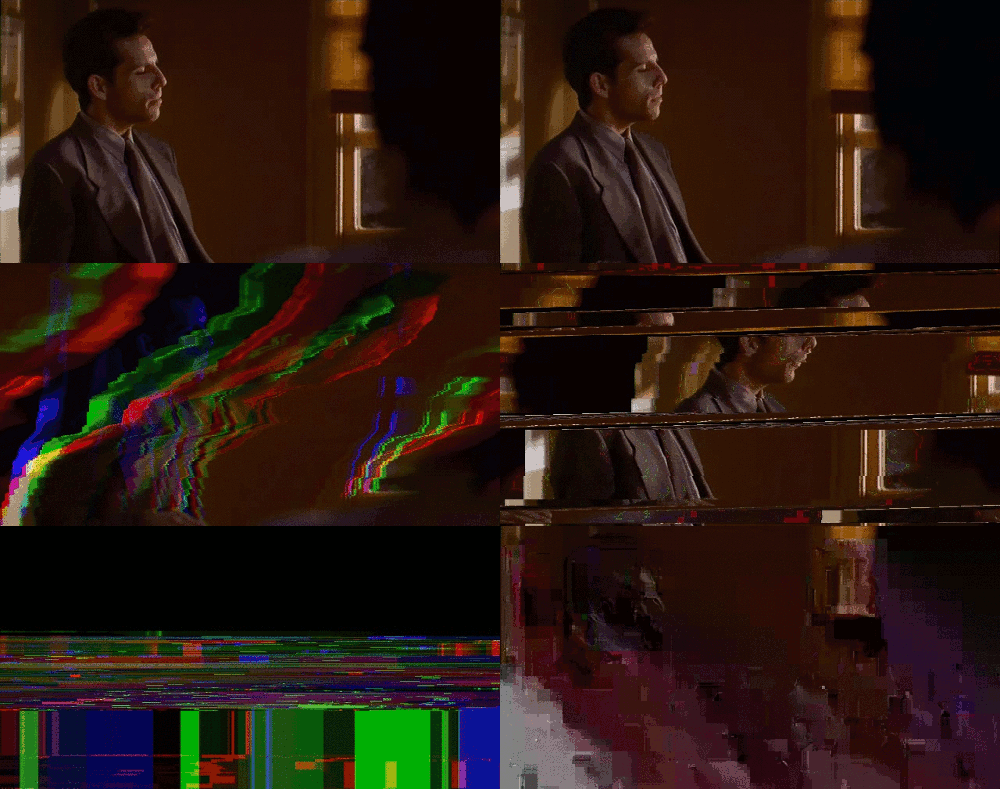
In order to investigate the relation between cinema and technology, it seems necessary to escape the medium’s own parameters of analysis. Taking a step in this direction, one might adopt Friedrich Kittler’s notion of “optical media,” a classification based not on the morphological effects of cinema, but on the operational principles of its apparatus. However, while Kittler’s framework discloses the mechanisms of figurative representation, it casts an even darker shadow over the constitution of technique. To analyse the cinematographic apparatus as purely optical is to ignore that its technical underpinnings are also mechanical and chemical, electromagnetic and computational. In order to bring these material aspects to the surface of the medium, one could borrow a strategy that has been largely employed with aesthetic ends: that of blinding or disrupting the camera eye. A vast tradition of video art and experimental cinema, recently joined by practices such as generative programming, presents visuals that are not produced by clear lenses, but that mostly result from celluloid film, electric circuits and digital codification. This paper calls attention to the ways in which this sort of blind optics produces images not by the means of abstracting the world, but through the abstraction of the bare apparatus. Thus, it sheds some light in the processes of inscription and transmission that ultimately constitute audiovisual media, allowing us to grasp some of their particularities.

GLI.TC/H BIRM preview: GLTI.CH Karaoke

GLI.TC/H has started and on Saturday November 19th it’ll be making its way to VIVID in Birmingham, UK! The full programme is available here, and as a PDF. Over the week I’ll be providing a bitesized overview of the upcoming events.

Lecture: GLTI.CH Karaoke

Continuing their events at GLI.TC/H in Chicago and Amsterdam GLTI.CH Karaoke will be presenting their work, followed by a live performance!

Our aim is simple: to bring together people & collaborate on Karaoke duets. This desire, of course, is not innovative in itself; karaoke is one of the world’s favorite pastimes. Where GLTI.CH is different is its scope of our ‘bringing together’. So far, we have hooked up London with Kumamoto City, Japan & Seoul, South Korea. As a project that seeks to set up unnecessarily-elaborate portals of amateur singing, GLTI.CH Karaoke posits that there is discernible value & joy in 1) the collective stumbling & frustrations met in the face of tech limits, language barriers & time zone differences 2) oblique experimentation & 3) embracing & folding in “errors” in future iterations versus seeking to “overcome” or eradicate them. GLTI.CH Karaoke is not a solitary affair. At its simplest each event is the manifestation of sophisticated levels of collaboration & coordination between GLTI.CH & the attendees of each event, as well as the development teams of Livestream, Google+ & divX, & the individuals who selflessly hash together & upload karaoke videos to YouTube. Using the universal grammar of karaoke we posit the glitch as a site of artistic autonomy.

GLI.TC/H BIRM preview: Glitch Codec Tutorial

GLI.TC/H has started and on Saturday November 19th it’ll be making its way to VIVID in Birmingham, UK! The full programme is available here, and as a PDF. Over the week I’ll be providing a bitesized overview of the upcoming events.

Workshop: Glitch Codec Tutorial

Nick Briz presents a tutorial in creating glitch art by hacking video codecs:

This workshop/lecture is titled the Glitch Codec Tutorial. Here I demonstrate how to create the “glitch codec” a hacked piece of software I use to make intentional glitches. The Glitch Codec Tutorial is one way to experience glitch art. The Glitch Codec Tutorial can be used to make glitch art, but it is not a tool in and of itself. Rather, it is a means to a tool or, more appropriately, a means to a method[ology] of production.

GLI.TC/H BIRM preview: Easy Circuit Bending

GLI.TC/H has started and on Saturday November 19th it’ll be making its way to VIVID in Birmingham, UK! The full programme is available here, and as a PDF. Over the week I’ll be providing a bitesized overview of the upcoming events.

Workshop: Easy Circuit Bending

Nikki Pugh presents a workshop exploring the basics of circuit bending. Add a light sensor to a desk toy in order to distort the sounds it makes by waving your hand over it. A bit like this:

Destructural Video - Leeds International Film Festival 2011

What is your glitch? 1bitgifavibmpbmpcmykbmprgbjpgmpgpcxpixpngppmsgisvgtgawebp will be screening alongside some more awesomerererer glitch videos at Destructural Video as part of Leeds International Film Festival 2011 on November 17th

Can the electronic stutters, crashes, errors and glitches that we encounter with technology in our day-to-day lives be considered beautiful in their own right? This programme of extraordinary video work showcases contemporary artists who exploit and explore the imperfections hidden in the signal/ data structures of moving image technology to striking effect. Recalling early video art experiments and key films from the Structural movement, these sometimes abstract but always emotional videos ultimately reveal the human qualities inherent in the technology we have created, electronic warts and all.

GLI.TC/H 20111 IS HERE!!!

GLI.TC/H 20111 programme

View more documents from hellocatfood

Download PDF

—————————————– [Chicago, US] —————————————– THU: Nov 3 @7pm – GLI.TC/H Gallery Opening @MBLABS

Alma Alloro [IL], Anthony Antonellis [DE], Melissa Barron [US], Mark Beasley [US], Sophia Brueckner [US], ffd8 (Ted Davis) [CH], Jeff Donaldson && Daniel Temkin [US], Leanne Eisen [CA + US], Noah Eisenbruch [US], Gijs Gieskes [NL], jimpunk [www], Jeff Kolar [US], Harvey Moon [US], aandnota (Alex Myers) [US], Osada Genki [JP], Chelsea Arden Parker [US], Rob Ray [US], Pox Party (Jon Satrom && Ben Syverson) [US], Ant Scott [UK], Phillip Stearns [US], Party Time! Hexcellent! (Rachel Weil) [US], youpy [JP], Recyclism™ And all the bumper artists!

Alvin Lucier: A Celebration

In Middletown, Connecticut between November 4th-6th? Alvin Lucier: A Celebration, is taking place at Wesleyan University’s Center for the Arts. I Am Sitting in a Room, along with other videos that respond to Lucier’s work of same name, will be screening at the Ezra and Cecile Zilkha Gallery.

Screenshot-lala.avi-1.png

This festival, in recognition of Alvin Lucier’s 80th birthday, will include an exhibition, symposium, films and a series of four concerts. The symposium will bring together key composers, musicians and writers to discuss Mr. Lucier’s work and influence.

Interview with Imperica - Celebrating Imperfection

I was interviewed by Imperica recently about GLI.TC/H coming to Birmingham.

Caca on Imperica

For the viewer, appreciating Glitch art inevitably depends on the form that the work takes, and an understanding of the work not being “broken” but a new construction in itself. Glitched artwork “… can be beautiful, but it can also be chaotically noisy. It isn’t just an hour of TV static or hard noise. They have a narrative; they tell a story in some way. I want the viewer to see the value in things that are corrupted, bent, and broken.”

GLI.TC/H 2011 - This website does not supply identity information

My bumper for GLI.TC/H 2011. Download the Pure Data patch that made this and make your own!

Discuss it with others on the Pure Data forum.

.our_name/website { GLI.TC/H gli.tc/h } .theDates { Chicago_USA: Nov 4-6 2011; Amsterdam_NL: Nov 11-12 2011; Birmingham_UK: Nov 19 2011; }

I’ve also recently started making diagrams of my Pure Data patches. I hope they go some way to helping people learn Pure Data

[caption id="" width=“500” caption=“Pretty pictures”]GLI.TC/H bumper Pure Data patch [/caption]

Making Skin Cells

The making of Skin Cells was quite a long process. It started projecting my Bunnies video onto me and filming this. I then took this and ran it through the What Glitch? sgi script to create a glitched version of the video, leaving me with two versions of the video.

Skin Cells

Skin Cells

When it came to merging the two videos together I took some inspiration from Tidepool by Tabor Robak. Putting the videos on top of each other I wanted to use chromakeying to reveal parts of the video at the bottom at the same time as really oversaturating the video. For this I employed the help of Pure Data:

Skin Cells

Skin cells breaking up.

Made using a mixture of Pure Data, Gridflow and Din.

GLI.TC/H 2011

DO iT TO_GATHER!

GLI.TC/H was a simple idea that was hatched upon the notion of folks gathering together and engaging/chatting/debating the issues/theories/concerns of failure, systems, art, && glitches.

We were able to realize this gathering last year in Chicago. GLI.TC/H 2010 brought people together for five days of glitchy art, hacking/coding workshops, discussions, screenings, lectures, and realtime audio/video performances. All events were free & open to the public and ended up exposing an extremely diverse, amazingly deep, somewhat quirky community.

LÖVE Glitches

Whilst I was in Venice for the Laptop Meets Musicians festival with BiLE I had the pleasure of (finally) meeting {rukano} who later showed me this really awesome way of displaying uncleared video memory with LOVE and LICK. I’m using Ubuntu 11.04 with LÖVE version love_0.7.2-0natty2_i386.deb.

LÖVE glitches

Once you have downloaded and installed LÖVE and LICK (instructions for different platforms are provided on their websites) create the following files:

What Revolution? in Libre Graphics Magazine

What Revolution? in Libre Graphics Magazine What Revolution? is featured in the Showcase section of issue 1.2 of Libre Graphics Magazine. The theme for this issues is Use Cases and Affordances:

Our software tools, in their affordances and potential use cases, define for us, to a certain extent, what we may and may not do. Those decisions are put in place by the people who design the tools. Together, as users, developers and all areas between the two extremes, we boil in a constantly reconfiguring sea of use possibilities, material and mental affordances.

Glitch smilies

Glitch smilies

I was unsatisfied with the way the default smilies on my blog were looking at me so I decided to glitch them :-)

Download them from here

These smilies were made using GlitchSVG and a bit of post-processing. To use them on your Wordpress site just replace the ones located at /wp-includes/images/smilies/ with these ones ;-)

What Glitch? scripts

For the What is Your Glitch? videos I wanted to build up on some of the extensive work that has already gone into the documentation, deconstruction and glitching of file formats. Rosa Menkman has already done a great job of documenting some of the more well-known file format glitches in the Vernacular of File Formats, which I recommend you all read. For this exercise I wanted to explore some of the more obscure file formats. Using open source software and Ubuntu has given me access to a wealth of programs that can still generate obscure file formats, such as pcx, pix and sgi. Through these experiments I also found inconsistencies in the way that different programs generate files, which is evident through my decision to use GIMP to convert files rather than Imagemagick in some of the scripts. Enough chit-chat, download the scripts!

What is your glitch?

A series of videos exploring the types of glitches and compression artefacts available from different image and video file formats.

Audio by defaultxr anddomesticflight

A collection of the scripts used to create these videos will be available shortly

Glitch Safari

During a few beers at GLI.TC/H a few months ago myself and notendo noticed the arcade machine in the corner was totally glitching out!

These kind of natural glitches happen all around us every day when we least expect it, but if you’re lucky enough to have caught these glitches on camera submit it to the Glitch Safari group and help create a map of glitches!

[caption id="" width=“468” caption=“www.vimeo.com/groups/glitchsafari | www.flickr.com/groups/glitchsafari"]Glitch Safari [/caption]

GLI.TC/H Screening 01

Tonight sees I Am Sitting In A Room being screened as part of GLI.TC/H. After a Panel Discussion at 4pm at SAIC Flaxman Theatre we move onto Transistor for the screening, starting at 8pm. You’re definitely in for a treat from some of the best benders, moshers, glitchers and [insert glitch sub-genre here]. Check the schedule for more awesome events

The gallery exhibition opening at Roxaboxen was a huge success. Glitches are clearly hot right now. The Interpretations of Reality glitch zines went down well, but through getting them reproduced at FedEx I started gathering ideas and thoughts about the copy effect, whereby noise artifacts appear as you begin to make copies of copies. I will definitely be exploring this idea at a later date.

GLI.TC/H Gallery Opening

[caption id="" align=“alignnone” width=“500” caption=“Photo by r00s”]GLI.TC/H [/caption]

Last night team GLI.TC/H was hard at work getting the gallery at Roxaboxen ready.

The gallery opening kicks off at 6:30pm at Roxaboxen and features work from some really great glitch art, videos and artware (oh, and one of my pieces). Be there.

GLI.TC/H bumper - No More Horse

After many sleepless horse my bumper for GLI.TC/H is complete. It’s a collection of many different glitch techniques including vector glitching and compressing to 1 bit images. You can see some progress shots on flickr

Play very loud.

Create your own glitch typeface

Making Dataface was really quite an exciting journey. What started off as an attempt to make a typeface inspired by glitch art turned out to be a story of collaboration, exploration and hours of research. Here, I will go through my process.

As you may have seen from my previous experiments in vector databending it’s totally possible to manipulate vector files. My original method for creating Dataface was to save each glyph in the Liberation font to an SVG file and then go through the process of glitching it for each file. Obviously this would’ve taken me a long time, hence why there was very little activity between my original announcement in January and when I started work on it again a few weeks ago.

A Short Introduction

Since I was introduced glitch art last May I’ve really been hooked on exploring this technique and how it can affect my artwork. One thing that I’ve never done is to explain why I do this, so here it goes!

For me glitch art is about exploring the boundaries in which things will operate as expected, with particular emphasis on computers. Computers are very complex and can take years to understand understand. Computers are also very obedient. They will do what you tell them to, but you have to tell them in a way that they understand. For example, it is assumed that if you double-click on an image it will open in an image viewer or editor. This is because the image has data in it (the header data) describing what kind of file it is and when you double-click on it an instruction is sent to open that kind of file with any program that can interpret it that data.

Dataface

After months of hard work I’m happy to finally release Dataface

[caption id="" width=“333” caption=“Click to download”] [/caption]

Special thanks go to various hackers at fizzPOP for all of their help, GB for programming help and Scribbleboy for general guidance. You can view of preview of the font here on Flickr.

There will soon be a lovely writeup of how it was done and the tools to use to create your own. Until then, I hope you enjoy Dataface!

Dataface update

Dataface is coming along rather nicely!

Dataface (by hellocatfood)

It looks different from my previous updates as I’m using a different method for glitching the typeface. This may change yet again if a script that I’m working on decides to work.

Interpretations of Reality

On 8th April I took a self-prescribed zine making day. Ever since the Gallery Of Owls meetup last year I’ve been increasingly interested in zines as a means of communication and the DIY scene as a whole. After many failed ideas I finally settled on showing the journey of a pixel and how it can be mutated through different ways of manipulating it, specifically through glitch art.

What is presented is the simple manipulation of the cover image over twelve pages. In my never-ending quest to explore glitch art off the screen, what then intrigued me was how I could print this. I then had the idea to print these images onto of printed material. In this way we see how glitches can alter our perception of already existing media. Does it add to or detract from the original intent or is it even noticeable? To pay homage to zine culture I’ve use pages from some of the zines that I’ve collected over the years as well as found papers that have been clogging up my inbox.

Where does it all go wrong?

I recently turned on the TV to find that the channel it was last on was totally glitching!

What I kept trying to figure out was where the glitch was occurring. Sure, it’s on screen, but what part of the signal is getting errors? I imagine that there’s three places it could’ve gone wrong: at Virgin Media headquaters, on the receiver at home or from the HDMI cable connecting the receiver to the TV. I turned the channel over and the glitch was gone, but that still doesn’t rule out where it could’ve been happening.

Glitched Badges

Badges from my video are now available from the Created in Birmingham shop!

[caption id=“attachment_1853” align=“aligncenter” width=“500” caption=“glitched badges”] [/caption]

This marks somewhat of a new shift for me as it’s the second time that I’ve taken glitch off the screen and into a more physical form. I do like that when I sent the images to print I received this e-mail:

Thank you for our order from —.

Just wanted to double check your artwork - the five files we’ve got are different colours of large pixel-style blocks, is this correct? Just wanted to ensure the files have come through to us correctly.

It's Just Noise!

As readers of my blog will know by now you can easily import any data into audacity and play it as audio. However, most data that you’ll import and then play will just turn out as noise. That is simply because there’s too much noise in the image i.e. too many colours and too much data. So, if you reduce the amount of colours and data in theory you get something a little bit more pleasing to the ear. Experimentationing time!

Lost in the Shell

As a result of the GNOME Usability Hackfest I’ve been trying out the GNOME Shell a lot. Although the result of an error with graphics cards I quite like the output of the integrated Screencast feature (Ctrl + Shift + Alt + R) with the cursor almost seeming lost

Preserving the glitch

On Thursday 4th March I took part in the AntsArtJam at BitJam in Stoke-on-Trent. Three canvases were set up on the stage and artists were invited to get creative on them as the night went on.

[caption id="" align=“aligncenter” width=“500” caption=“Photo by These Ants”]Antonio Roberts (by These Ants) [/caption]

Those who know me will know that live art is not something that I’ve really done before. I’ve done a fair bit of performing, but nothing like this, so it was quite an exciting challenge.

Dataface update

You may remember from my earlier blog post that I’ve been working on a databent typeface. It was mentioned a fair while back now, but I have been doing bits of work on it every now and then. Here’s a bit of my progress so far:

Ass you can see some of the characters are more recognisable than others. In fact, looking at it again I can’t really remember what some of them were. As I’m planning on having most characters mapped out, in upper and lower case, progress will be a bit slow, so I’ll aim for April for a completed font.

Visualising BitJam

On Thursday 4th February I was Stoke-on-Trent for BitJam. I still don’t have anything ready to show on stage but thought I’d use the night as a testing ground for some of my ideas. I wanted to investigate ways in which to interpret what was happening around me. The main performance of the night was from a chap called Arctic Sunrise

For my first test I fired up Alchemy and attempted to draw the music. Alchemy fortunately has a few tools that can make your sketches react to sounds. They are Create > Mic Shapes and Affect > Mic Expand. Here’s the result of using both of them together

Echobender

Myself and Mez recently finished a script called Echobender that automatically databends images.

[caption id=“attachment_1766” width=“500” caption=“Click to view on GitHub”] [/caption]

To use it you’ll need:

  • A computer with Linux installed. I don’t have a Windows or Mac PC so I can’t test it on those
  • Sox. On Ubuntu you can install it via sudo apt-get install sox
  • Convert, which is part of ImageMagick. On Ubuntu you can install it via sudo apt-get install imagemagick

Once you have those installed just execute ./echobender.sh from the terminal and then drop a .jpg or .bmp file into it. The output will be in a folder called “echo”.

Streams of data

One of my overall goals is to find a way to databend live video. I’m sure there’s a way to do it with Processing and PureData but I’m not yet proficient in those programs so they’re out of the question for now. In the meantime I thought to try and hack the Echobender script to databend my webcam images.

>tonyg provides a great tutorial on how to convert live webcam images into audio, which I’ve used as a starting point for my hack.

Moo mini cards

I’m not sure why, but I’ve never had business cards…. until now (sorta). I’ve just finished designing these eight:

Mini Cards (by hellocatfood)

As expected databending played a big part in their creation as did a bit of post processing. Time to get them printed!

Birthday Cake

After seeing my newly created twitter background, Jon (aka scribbleboy) asked me to do one for him. So I did. In fact, I did several versions

Birthday Cake (by hellocatfood)

Birthday Cake (by hellocatfood)

Birthday Cake (by hellocatfood)

He asked for something red, so I took a few birthday pictures and did the equivalent of putting them through a shredder!

Happy New Year

Happy New Year (by hellocatfood)

I hope this year brings you lots of good stuff and copious amounts of cake!

Beginnings of a glitch typeface

I was speaking with Jon earlier about my work and he’s noted that a lot of it has been text based and then asked if I was working towards making a typeface in the same style. I must admit, my recent text based work has mostly been an excuse to use the awesome Kawoszeh typeface, but I feel he’s onto something.

Whilst I’m quite far from a complete typeface I’ve been doing a few experiments:

Hello Glitch

Using the same svg glitching techniques that I’ve come to love, today, with the help of Twitter folk, I created this rather short animation that compliments my new deviantART ID

My initial aim was glitch the video file itself but then I figured it’d be quite different to glitch each frame individually. To do this I created the original text in Inkscape and then created 52 copies of it. I then opened up the file in a text editor and began messing around with the numbers!

Bull Glitch

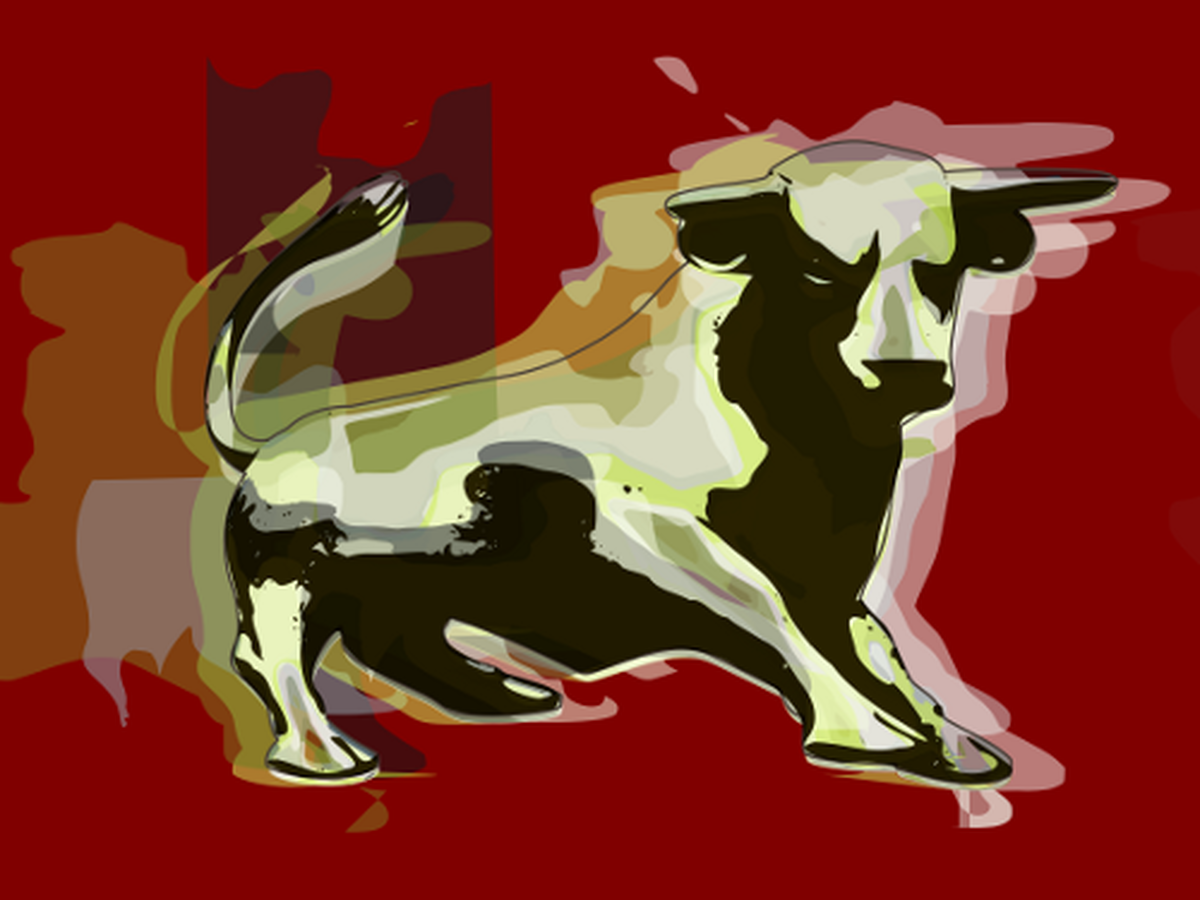
You may have noticed that in my previous post there was a nice little image of the Bull Ring Bull. I did that! Before I go on, it’s not an image that will be used for Birmingham’s City of Culture bid (though if you really like it monies plz). It’s more an image just to represent the work that we’re doing to collect opinions of Birmingham.

bull glitch

Although not a completely original concept (Andy Warhol anyone?) I have utilised a few newly found techniques to create it. Whilst the results, and indeed databending as a whole looks cool I have yet to use it in any real world situations. Until now that is.

Databending using Audacity

Thanks to some help on the Audacity forum I finally know out how to use Audacity to databend. Previously I’d been using mhWavEdit, which has its limitations and just doesn’t feel as familiar as Audacity. From talk on the various databending discussion boards I found that people would often use tools like Cool Edit/Adobe Audition for their bends. Being on Linux and restricting myself to things that run natively (i.e. not under Wine) presented a new challenge. Part of my task was to replicate the methods others have found but under Linux. My ongoing quest is to find things that only Linux can do, which I’m sure I’ll find when I eventually figure out how to pipe data through one program into another!

Video conversion glitch

I made this video at a training day in using Macs/video editing software with children and community groups. I completed the task as asked but then switched to my laptop, fired up kdenlive and tried to see what it was capable of. It was upon exporting to ogg that I got a nice surprise.

Whilst this kind of glitch is rather nice one must be careful not to be reliant on it for production as at any time it could be fixed. Effects such as this Photoshop truncating glitch are now only possible in Photoshop 6 as the bug that caused it has been fixed. This is why I’m now more on the lookout for programs/scripts and guaranteed methods for reproducing glitch effects. The ones that tend to be best at this are ones that can import any data, an example of this being Audacity’s ability to attempt to load any file you load into it.

Bending a penguin

Awhile back I did a quick vector illustration of a penguin. It was nothing much really but as far as penguins go I quite liked this one. Recently (as in, the last four months) I’ve been interested in databending. Have you ever had an image you’ve taken come out like it’s been through a shredder? That’s the effect that most databenders are after. In a way it’s like trying to reproduce an error. Once you’ve done it a few times you get to learn what effects different methods can produce but even then it’s very unpredictable. For a short tutorial on databending an image, take a look at the one I wrote for fizzPOP.