Linux

OCR to Text to Speech

For the sixth video in the Design Yourself series the group worked with artist Erica Scourti. For the activity the participants used optical character recognition software (OCR) to generate poetry from their own handwriting and writing (leaflets, signage) found throughout the Barbican building.

The next stage in the workshop was going to be to take this extracted text and run it through a text to speech synthesizer, but unfortunately there wasn’t time to get to this stage.

Typewriter Text Effect Revisited

For the fifth video in the Design Yourself series I was faced yet again with the task of doing a typewriter text effect. Yay… For each of the videos the participants wrote a poem to go with it. The poems were a really important part of the video so they needed to have a prominent role in the video beyond standard Youtube subtitles. At the time I was producing the video I didn’t yet know whether or not I wanted to use the typewriter text effect but I certainly wanted to explore it as a possibility. One of the first times I tried to achieve this was back in 2019 when I was making the video to promote the Algorave at the British Library.

Motion Interpolation for Glitch Aesthetics using FFmpeg part 9

Below are a few examples of how you can use FFmpeg’s minterpolate to create artworks with a glitch aesthetic.

You can read about how I used it for an artwork in this blog post. You can also grab the source file for these videos here. Give it a try yourself!

mc_mode=aobmc:me_mode=bilat:me=ds

[video width=“1920” height=“1080” mp4=“https://www.hellocatfood.com/wp-content/uploads/2020/02/033_mc_modeaobmc_me_modebilat_meds.mp4”][/video] [code]ffmpeg -i cat_rainbow_original.mp4 -filter:v “setpts=62.5*PTS,minterpolate=‘fps=25:mb_size=16:search_param=400:vsbmc=0:scd=none:mc_mode=aobmc:me_mode=bilat:me=ds’” 033_mc_mode=aobmc_me_mode=bilat_me=ds.mp4[/code]

mc_mode=aobmc:me_mode=bilat:me=hexbs

[video width=“1920” height=“1080” mp4=“https://www.hellocatfood.com/wp-content/uploads/2020/02/034_mc_modeaobmc_me_modebilat_mehexbs.mp4”][/video] [code]ffmpeg -i cat_rainbow_original.mp4 -filter:v “setpts=62.5*PTS,minterpolate=‘fps=25:mb_size=16:search_param=400:vsbmc=0:scd=none:mc_mode=aobmc:me_mode=bilat:me=hexbs’” 034_mc_mode=aobmc_me_mode=bilat_me=hexbs.mp4[/code]

mc_mode=aobmc:me_mode=bilat:me=epzs

[video width=“1920” height=“1080” mp4=“https://www.hellocatfood.com/wp-content/uploads/2020/02/035_mc_modeaobmc_me_modebilat_meepzs.mp4”][/video] [code]ffmpeg -i cat_rainbow_original.mp4 -filter:v “setpts=62.5*PTS,minterpolate=‘fps=25:mb_size=16:search_param=400:vsbmc=0:scd=none:mc_mode=aobmc:me_mode=bilat:me=epzs’” 035_mc_mode=aobmc_me_mode=bilat_me=epzs.mp4[/code]

Motion Interpolation for Glitch Aesthetics using FFmpeg part 8

Below are a few examples of how you can use FFmpeg’s minterpolate to create artworks with a glitch aesthetic.

You can read about how I used it for an artwork in this blog post. You can also grab the source file for these videos here. Give it a try yourself!

mc_mode=aobmc:me_mode=bilat:me=tss

[video width=“1920” height=“1080” mp4=“https://www.hellocatfood.com/wp-content/uploads/2020/02/029_mc_modeaobmc_me_modebilat_metss.mp4”][/video] [code]ffmpeg -i cat_rainbow_original.mp4 -filter:v “setpts=62.5*PTS,minterpolate=‘fps=25:mb_size=16:search_param=400:vsbmc=0:scd=none:mc_mode=aobmc:me_mode=bilat:me=tss’” 029_mc_mode=aobmc_me_mode=bilat_me=tss.mp4[/code]

mc_mode=aobmc:me_mode=bilat:me=tdls

[video width=“1920” height=“1080” mp4=“https://www.hellocatfood.com/wp-content/uploads/2020/02/030_mc_modeaobmc_me_modebilat_metdls.mp4”][/video] [code]ffmpeg -i cat_rainbow_original.mp4 -filter:v “setpts=62.5*PTS,minterpolate=‘fps=25:mb_size=16:search_param=400:vsbmc=0:scd=none:mc_mode=aobmc:me_mode=bilat:me=tdls’” 030_mc_mode=aobmc_me_mode=bilat_me=tdls.mp4[/code]

mc_mode=aobmc:me_mode=bilat:me=ntss

[video width=“1920” height=“1080” mp4=“https://www.hellocatfood.com/wp-content/uploads/2020/02/031_mc_modeaobmc_me_modebilat_mentss.mp4”][/video] [code]ffmpeg -i cat_rainbow_original.mp4 -filter:v “setpts=62.5*PTS,minterpolate=‘fps=25:mb_size=16:search_param=400:vsbmc=0:scd=none:mc_mode=aobmc:me_mode=bilat:me=ntss’” 031_mc_mode=aobmc_me_mode=bilat_me=ntss.mp4[/code]

Motion Interpolation for Glitch Aesthetics using FFmpeg part 7

Below are a few examples of how you can use FFmpeg’s minterpolate to create artworks with a glitch aesthetic.

You can read about how I used it for an artwork in this blog post. You can also grab the source file for these videos here. Give it a try yourself!

mc_mode=obmc:me_mode=bilat:me=hexbs

[video width=“1920” height=“1080” mp4=“https://www.hellocatfood.com/wp-content/uploads/2020/02/025_mc_modeobmc_me_modebilat_mehexbs.mp4”][/video] [code]ffmpeg -i cat_rainbow_original.mp4 -filter:v “setpts=62.5*PTS,minterpolate=‘fps=25:mb_size=16:search_param=400:vsbmc=0:scd=none:mc_mode=obmc:me_mode=bilat:me=hexbs’” 025_mc_mode=obmc_me_mode=bilat_me=hexbs.mp4[/code]

mc_mode=obmc:me_mode=bilat:me=epzs

[video width=“1920” height=“1080” mp4=“https://www.hellocatfood.com/wp-content/uploads/2020/02/026_mc_modeobmc_me_modebilat_meepzs.mp4”][/video] [code]ffmpeg -i cat_rainbow_original.mp4 -filter:v “setpts=62.5*PTS,minterpolate=‘fps=25:mb_size=16:search_param=400:vsbmc=0:scd=none:mc_mode=obmc:me_mode=bilat:me=epzs’” 026_mc_mode=obmc_me_mode=bilat_me=epzs.mp4[/code]

mc_mode=obmc:me_mode=bilat:me=umh

[video width=“1920” height=“1080” mp4=“https://www.hellocatfood.com/wp-content/uploads/2020/02/027_mc_modeobmc_me_modebilat_meumh.mp4”][/video] [code]ffmpeg -i cat_rainbow_original.mp4 -filter:v “setpts=62.5*PTS,minterpolate=‘fps=25:mb_size=16:search_param=400:vsbmc=0:scd=none:mc_mode=obmc:me_mode=bilat:me=umh’” 027_mc_mode=obmc_me_mode=bilat_me=umh.mp4[/code]

Motion Interpolation for Glitch Aesthetics using FFmpeg part 6

Below are a few examples of how you can use FFmpeg’s minterpolate to create artworks with a glitch aesthetic.

You can read about how I used it for an artwork in this blog post. You can also grab the source file for these videos here. Give it a try yourself!

mc_mode=obmc:me_mode=bilat:me=tdls

[video width=“1920” height=“1080” mp4=“https://www.hellocatfood.com/wp-content/uploads/2020/02/021_mc_modeobmc_me_modebilat_metdls.mp4”][/video] [code]ffmpeg -i cat_rainbow_original.mp4 -filter:v “setpts=62.5*PTS,minterpolate=‘fps=25:mb_size=16:search_param=400:vsbmc=0:scd=none:mc_mode=obmc:me_mode=bilat:me=tdls’” 021_mc_mode=obmc_me_mode=bilat_me=tdls.mp4[/code]

mc_mode=obmc:me_mode=bilat:me=ntss

[video width=“1920” height=“1080” mp4=“https://www.hellocatfood.com/wp-content/uploads/2020/02/022_mc_modeobmc_me_modebilat_mentss.mp4”][/video] [code]ffmpeg -i cat_rainbow_original.mp4 -filter:v “setpts=62.5*PTS,minterpolate=‘fps=25:mb_size=16:search_param=400:vsbmc=0:scd=none:mc_mode=obmc:me_mode=bilat:me=ntss’” 022_mc_mode=obmc_me_mode=bilat_me=ntss.mp4[/code]

mc_mode=obmc:me_mode=bilat:me=fss

[video width=“1920” height=“1080” mp4=“https://www.hellocatfood.com/wp-content/uploads/2020/02/023_mc_modeobmc_me_modebilat_mefss.mp4”][/video] [code]ffmpeg -i cat_rainbow_original.mp4 -filter:v “setpts=62.5*PTS,minterpolate=‘fps=25:mb_size=16:search_param=400:vsbmc=0:scd=none:mc_mode=obmc:me_mode=bilat:me=fss’” 023_mc_mode=obmc_me_mode=bilat_me=fss.mp4[/code]

Motion Interpolation for Glitch Aesthetics using FFmpeg part 5

Below are a few examples of how you can use FFmpeg’s minterpolate to create artworks with a glitch aesthetic.

You can read about how I used it for an artwork in this blog post. You can also grab the source file for these videos here. Give it a try yourself!

mc_mode=aobmc:me_mode=bidir:me=epzs

[video width=“1920” height=“1080” mp4=“https://www.hellocatfood.com/wp-content/uploads/2020/02/017_mc_modeaobmc_me_modebidir_meepzs.mp4”][/video] [code]ffmpeg -i cat_rainbow_original.mp4 -filter:v “setpts=62.5*PTS,minterpolate=‘fps=25:mb_size=16:search_param=400:vsbmc=0:scd=none:mc_mode=aobmc:me_mode=bidir:me=epzs:’” 017_mc_mode=aobmc_me_mode=bidir_me=epzs.mp4[/code]

mc_mode=aobmc:me_mode=bidir:me=umh

[video width=“1920” height=“1080” mp4=“https://www.hellocatfood.com/wp-content/uploads/2020/02/018_mc_modeaobmc_me_modebidir_meumh.mp4”][/video] [code]ffmpeg -i cat_rainbow_original.mp4 -filter:v “setpts=62.5*PTS,minterpolate=‘fps=25:mb_size=16:search_param=400:vsbmc=0:scd=none:mc_mode=aobmc:me_mode=bidir:me=umh’” 018_mc_mode=aobmc_me_mode=bidir_me=umh.mp4[/code]

mc_mode=obmc:me_mode=bilat:me=esa

[video width=“1920” height=“1080” mp4=“https://www.hellocatfood.com/wp-content/uploads/2020/02/019_mc_modeobmc_me_modebilat_meesa.mp4”][/video] [code]ffmpeg -i cat_rainbow_original.mp4 -filter:v “setpts=62.5*PTS,minterpolate=‘fps=25:mb_size=16:search_param=400:vsbmc=0:scd=none:mc_mode=obmc:me_mode=bilat:me=esa’” 019_mc_mode=obmc_me_mode=bilat_me=esa.mp4[/code]

Motion Interpolation for Glitch Aesthetics using FFmpeg part 4

Below are a few examples of how you can use FFmpeg’s minterpolate to create artworks with a glitch aesthetic.

You can read about how I used it for an artwork in this blog post. You can also grab the source file for these videos here. Give it a try yourself!

mc_mode=aobmc:me_mode=bidir:me=ntss

[video width=“1920” height=“1080” mp4=“https://www.hellocatfood.com/wp-content/uploads/2020/02/013_mc_modeaobmc_me_modebidir_mentss.mp4”][/video] [code]ffmpeg -i cat_rainbow_original.mp4 -filter:v “setpts=62.5*PTS,minterpolate=‘fps=25:mb_size=16:search_param=400:vsbmc=0:scd=none:mc_mode=aobmc:me_mode=bidir:me=ntss’” 013_mc_mode=aobmc_me_mode=bidir_me=ntss.mp4[/code]

mc_mode=aobmc:me_mode=bidir:me=fss

[video width=“1920” height=“1080” mp4=“https://www.hellocatfood.com/wp-content/uploads/2020/02/014_mc_modeaobmc_me_modebidir_mefss.mp4”][/video] [code]ffmpeg -i cat_rainbow_original.mp4 -filter:v “setpts=62.5*PTS,minterpolate=‘fps=25:mb_size=16:search_param=400:vsbmc=0:scd=none:mc_mode=aobmc:me_mode=bidir:me=fss’” 014_mc_mode=aobmc_me_mode=bidir_me=fss.mp4[/code]

mc_mode=aobmc:me_mode=bidir:me=ds

[video width=“1920” height=“1080” mp4=“https://www.hellocatfood.com/wp-content/uploads/2020/02/015_mc_modeaobmc_me_modebidir_meds.mp4”][/video] [code]ffmpeg -i cat_rainbow_original.mp4 -filter:v “setpts=62.5*PTS,minterpolate=‘fps=25:mb_size=16:search_param=400:vsbmc=0:scd=none:mc_mode=aobmc:me_mode=bidir:me=ds’” 015_mc_mode=aobmc_me_mode=bidir_me=ds.mp4[/code]

Motion Interpolation for Glitch Aesthetics using FFmpeg part 3

Below are a few examples of how you can use FFmpeg’s minterpolate to create artworks with a glitch aesthetic.

You can read about how I used it for an artwork in this blog post. You can also grab the source file for these videos here. Give it a try yourself!

mc_mode=obmc:me_mode=bidir:me=umh

[video width=“1920” height=“1080” mp4=“https://www.hellocatfood.com/wp-content/uploads/2020/02/009_mc_modeobmc_me_modebidir_meumh.mp4”][/video] [code]ffmpeg -i cat_rainbow_original.mp4 -filter:v “setpts=62.5*PTS,minterpolate=‘fps=25:mb_size=16:search_param=400:vsbmc=0:scd=none:mc_mode=obmc:me_mode=bidir:me=umh’” 009_mc_mode=obmc_me_mode=bidir_me=umh.mp4[/code]

mc_mode=aobmc:me_mode=bidir:me=esa

[video width=“1920” height=“1080” mp4=“https://www.hellocatfood.com/wp-content/uploads/2020/02/010_mc_modeaobmc_me_modebidir_meesa.mp4”][/video] [code]ffmpeg -i cat_rainbow_original.mp4 -filter:v “setpts=62.5*PTS,minterpolate=‘fps=25:mb_size=16:search_param=400:vsbmc=0:scd=none:mc_mode=aobmc:me_mode=bidir:me=esa’” 010_mc_mode=aobmc_me_mode=bidir_me=esa.mp4[/code]

mc_mode=aobmc:me_mode=bidir:me=tss

[video width=“1920” height=“1080” mp4=“https://www.hellocatfood.com/wp-content/uploads/2020/02/011_mc_modeaobmc_me_modebidir_metss.mp4”][/video] [code]ffmpeg -i cat_rainbow_original.mp4 -filter:v “setpts=62.5*PTS,minterpolate=‘fps=25:mb_size=16:search_param=400:vsbmc=0:scd=none:mc_mode=aobmc:me_mode=bidir:me=tss’” 011_mc_mode=aobmc_me_mode=bidir_me=tss.mp4[/code]

Motion Interpolation for Glitch Aesthetics using FFmpeg part 2

Below are a few examples of how you can use FFmpeg’s minterpolate to create artworks with a glitch aesthetic.

You can read about how I used it for an artwork in this blog post. You can also grab the source file for these videos here. Give it a try yourself!

mc_mode=obmc:me_mode=bidir:me=fss

[video width=“1920” height=“1080” mp4=“https://www.hellocatfood.com/wp-content/uploads/2020/02/005_mc_modeobmc_me_modebidir_mefss.mp4”][/video] [code]ffmpeg -i cat_rainbow_original.mp4 -filter:v “setpts=62.5*PTS,minterpolate=‘fps=25:mb_size=16:search_param=400:vsbmc=0:scd=none:mc_mode=obmc:me_mode=bidir:me=fss’” 005_mc_mode=obmc_me_mode=bidir_me=fss.mp4[/code]

mc_mode=obmc:me_mode=bidir:me=ds

[video width=“1920” height=“1080” mp4=“https://www.hellocatfood.com/wp-content/uploads/2020/02/006_mc_modeobmc_me_modebidir_meds.mp4”][/video] [code]ffmpeg -i cat_rainbow_original.mp4 -filter:v “setpts=62.5*PTS,minterpolate=‘fps=25:mb_size=16:search_param=400:vsbmc=0:scd=none:mc_mode=obmc:me_mode=bidir:me=ds’” 006_mc_mode=obmc_me_mode=bidir_me=ds.mp4[/code]

mc_mode=obmc:me_mode=bidir:me=hexbs

[video width=“1920” height=“1080” mp4=“https://www.hellocatfood.com/wp-content/uploads/2020/02/007_mc_modeobmc_me_modebidir_mehexbs.mp4”][/video] [code]ffmpeg -i cat_rainbow_original.mp4 -filter:v “setpts=62.5*PTS,minterpolate=‘fps=25:mb_size=16:search_param=400:vsbmc=0:scd=none:mc_mode=obmc:me_mode=bidir:me=hexbs’” 007_mc_mode=obmc_me_mode=bidir_me=hexbs.mp4[/code]

Motion Interpolation for Glitch Aesthetics using FFmpeg part 1

Below are a few examples of how you can use FFmpeg’s minterpolate to create artworks with a glitch aesthetic.

You can read about how I used it for an artwork in this blog post. You can also grab the source file for these videos here. Give it a try yourself!

mc_mode=obmc:me_mode=bidir:me=esa

[video width=“1920” height=“1080” mp4=“https://www.hellocatfood.com/wp-content/uploads/2020/02/001_mc_modeobmc_me_modebidir_meesa.mp4”][/video]

[code]ffmpeg -i cat_rainbow_original.mp4 -filter:v “setpts=62.5*PTS,minterpolate=‘fps=25:mb_size=16:search_param=400:vsbmc=0:scd=none:mc_mode=obmc:me_mode=bidir:me=esa’” 001_mc_mode=obmc_me_mode=bidir_me=esa.mp4[/code]

mc_mode=obmc:me_mode=bidir:me=tss

[video width=“1920” height=“1080” mp4=“https://www.hellocatfood.com/wp-content/uploads/2020/02/002_mc_modeobmc_me_modebidir_metss.mp4”][/video]

[code]ffmpeg -i cat_rainbow_original.mp4 -filter:v “setpts=62.5*PTS,minterpolate=‘fps=25:mb_size=16:search_param=400:vsbmc=0:scd=none:mc_mode=obmc:me_mode=bidir:me=tss’” 002_mc_mode=obmc_me_mode=bidir_me=tss.mp4[/code]

mc_mode=obmc:me_mode=bidir:me=tdls

[video width=“1920” height=“1080” mp4=“https://www.hellocatfood.com/wp-content/uploads/2020/02/003_mc_modeobmc_me_modebidir_metdls.mp4”][/video]

Motion Interpolation for Glitch Aesthetics using FFmpeg part 0

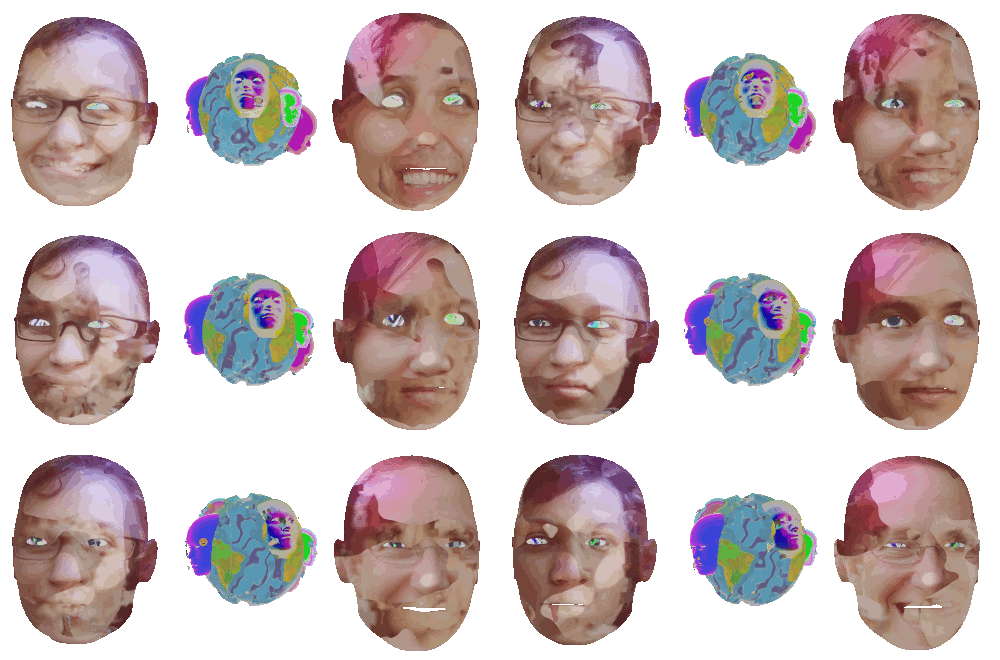
As you may have seen in this blog post I made use of FFmpeg’s minterpolate motion interpolation options to make all of the faces morph. There’s quite a few options for minterpolate and many different combinations of options that can be used. i had to consult Wikipedia to figure out exactly what the different motion estimation algorithms were but even with that information I couldn’t visualise how it would change the output. To add to this how I’m using minterpolate isn’t a typical use case.

Producing audio for Let's Never Meet

For the majority of my career in art I’ve been primarily known for my visual artwork. I’ve dabbled in making noises with my Sonification Studies performances (which may make a comeback at some point) but it’s only since my 2018 performance at databit.me that I’ve regularly made and performed music.

On the performance side I’ve mostly used TidalCycles. You may have seen that I have been doing live streams of my rehearsals.

Adventures in Vector Quantization

Ever since seeing Radio Dada by Rosa Menkman I’ve been forever trying to reproduce the style of compression/glitches it uses.

In my limited knowledge about the production of the video I do know what it uses compression artifacts found in the Cinepak codec. So, I set out to try and find a way of converting a video to a video that uses the Cinepak codec. If you’ve been following me you’ll that I’ve asked for help on many fora and mailing lists for help with initially little success.

What Glitch? scripts

For the What is Your Glitch? videos I wanted to build up on some of the extensive work that has already gone into the documentation, deconstruction and glitching of file formats. Rosa Menkman has already done a great job of documenting some of the more well-known file format glitches in the Vernacular of File Formats, which I recommend you all read. For this exercise I wanted to explore some of the more obscure file formats. Using open source software and Ubuntu has given me access to a wealth of programs that can still generate obscure file formats, such as pcx, pix and sgi. Through these experiments I also found inconsistencies in the way that different programs generate files, which is evident through my decision to use GIMP to convert files rather than Imagemagick in some of the scripts. Enough chit-chat, download the scripts!

Echobender

Myself and Mez recently finished a script called Echobender that automatically databends images.

[caption id=“attachment_1766” width=“500” caption=“Click to view on GitHub”] [/caption]

To use it you’ll need:

  • A computer with Linux installed. I don’t have a Windows or Mac PC so I can’t test it on those
  • Sox. On Ubuntu you can install it via sudo apt-get install sox
  • Convert, which is part of ImageMagick. On Ubuntu you can install it via sudo apt-get install imagemagick

Once you have those installed just execute ./echobender.sh from the terminal and then drop a .jpg or .bmp file into it. The output will be in a folder called “echo”.

Databending using Audacity

Thanks to some help on the Audacity forum I finally know out how to use Audacity to databend. Previously I’d been using mhWavEdit, which has its limitations and just doesn’t feel as familiar as Audacity. From talk on the various databending discussion boards I found that people would often use tools like Cool Edit/Adobe Audition for their bends. Being on Linux and restricting myself to things that run natively (i.e. not under Wine) presented a new challenge. Part of my task was to replicate the methods others have found but under Linux. My ongoing quest is to find things that only Linux can do, which I’m sure I’ll find when I eventually figure out how to pipe data through one program into another!

Ubuntu Bug Jam

Ubuntu Bug Jam

From Friday 2nd to Sunday many Ubuntu, Linux and Open Source enthusiasts descended upon the Linux Emporium to take part in the Ubuntu Bug Jam. In the words of an Ubuntu blogger, the Ubuntu Bug Jam is:

…a world-wide online and face-to-face event to get people together to fix Ubuntu bugs - we want to get as many people online fixing bugs, having a great time doing so, and putting their brick in the wall for free software. This is not only a great opportunity to really help Ubuntu, but to also get together with other Ubuntu fans to make a difference together, either via your LoCo team, your LUG, other free software group, or just getting people together in your house/apartment to fix bugs and have a great time.

Making a Disco Ball using Blender and Inkscape

Awhile back I started doing a few experiments using Blender and Inkscape together. One of my creations from this was a ball.

Blender/Inkscape Sphere (by hellocatfood)

Recently one Inkscape user created a tutorial describing how to make a disco ball directly in Inkscape. Looking back at that ball that I made it kinda resembles a disco ball, so I decided to write a tutorial on how I did it.

Anything you can do I can also do

Recently at my job at any one time there’d be up to four different operating systems in just one room. There’d be Windows XP, which was on most of the computers, Windows Vista, which I used to dual boot, Ubuntu, my OS of choice and Mac OS X. I’d often have chats with one of my collegues about the differences between each operating system, and they’d always proclaim that Mac’s are superior to everything else. When asked why they’re so much better he could never give me an answer.

Radio Amarok

My friend Mez informed me that Amarok, the popular media player for Linux and Unix systems is starting its own radio station, imaginatively called Radio Amarok. Whilst I didn’t want to design the website, I did have the pleasure of designing a new logo. After various attempts the panel chose this design:
Radio Amarok logo